Vitiligo and gut health are connected in ways the research is only now starting to confirm. Here’s what I’ve learned from living with white patches on my skin for a decade and why my gut health focus makes more sense than I initially realized.
Disclosure: This post contains affiliate links. If you purchase through our links we may earn a small commission at no extra cost to you. We only recommend products Wendy personally uses and believes in. Read our full Affiliate Disclosure here.
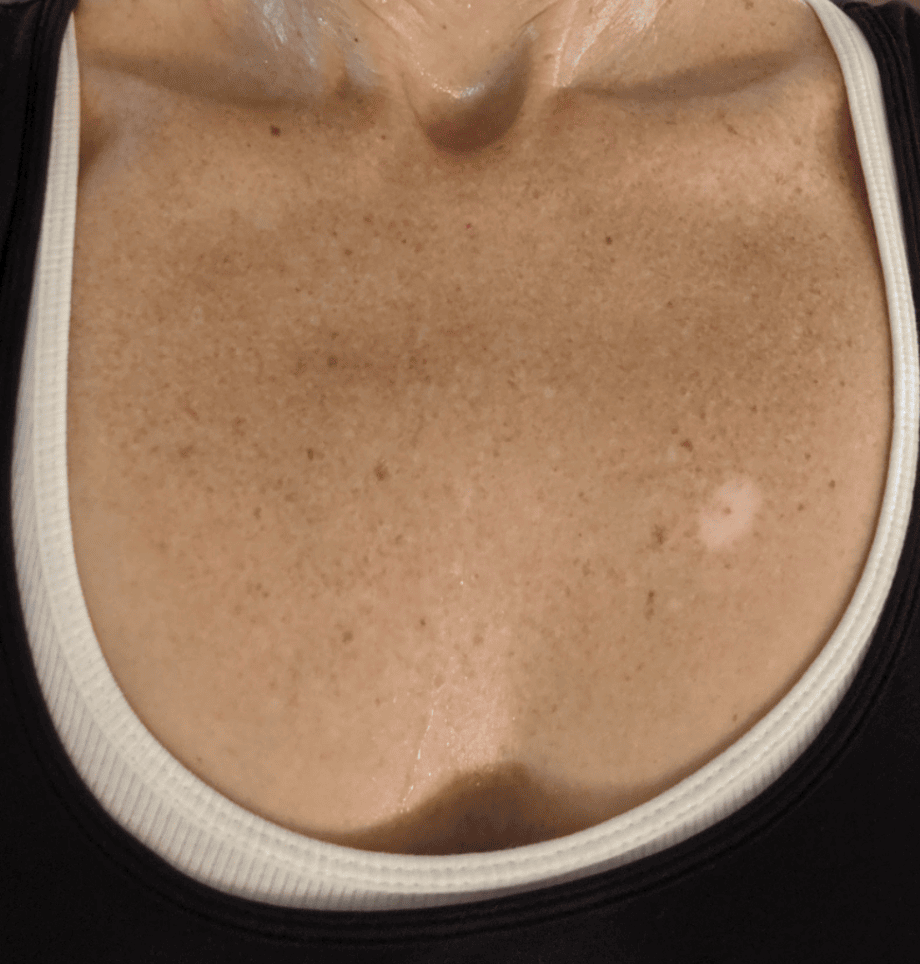
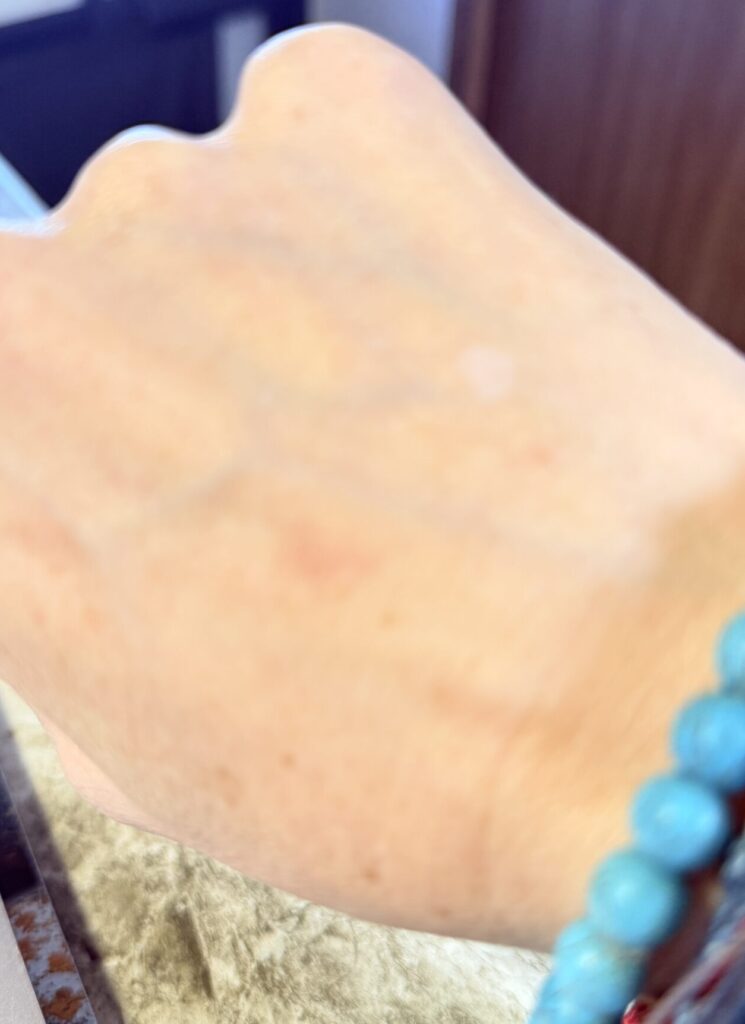
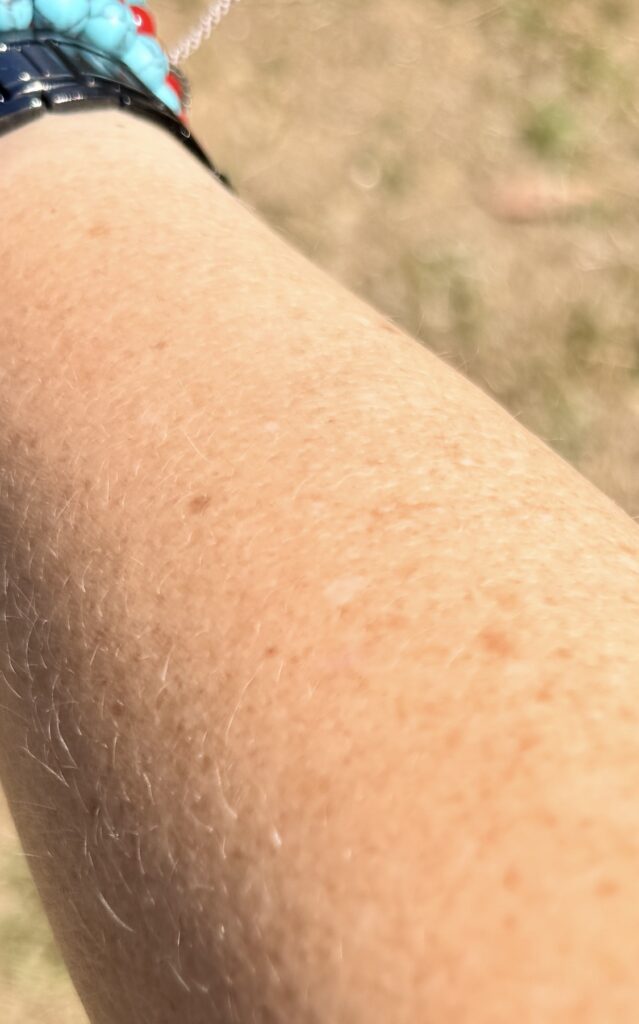
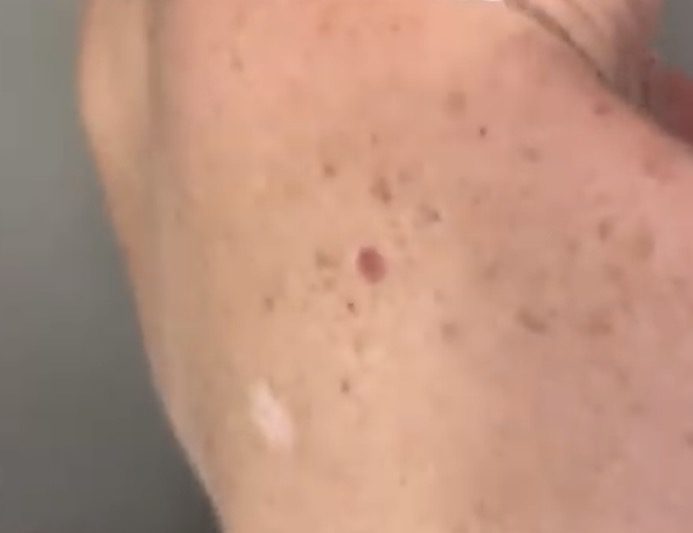
I noticed the first one on my chest about ten years ago. A white patch, soft-edged, unmistakable. It’s in every tank top and beach photo I’ve taken since, and you notice it immediately. A year or so later, one showed up on my hand. Since then, more have appeared here and there, and I don’t always notice them until summer, when my surrounding skin tans and the contrast makes them obvious.
I’ve never been officially diagnosed. I haven’t sat in a dermatologist’s office and received a formal vitiligo diagnosis on paper. But I know what I’m looking at. The pattern, the edges, the way they hold no pigment while everything around them colors in the sun, it’s consistent with what vitiligo looks like on fair skin.
What I didn’t know until recently is how closely vitiligo is tied to what’s happening in the gut.
What Is Vitiligo and Why Does Gut Health Matter?
Vitiligo is an autoimmune condition where the body’s immune system attacks and destroys melanocytes, the cells responsible for producing pigment in the skin. The result is patches of skin that lose their color entirely and turn white or pale. It affects roughly 0.5 to 2% of the global population and occurs in people of all skin tones, though it’s often harder to see on fair skin until sun exposure creates contrast. Research now shows that the gut microbiome plays a direct role in regulating the immune system, and people with vitiligo consistently show measurable differences in gut microbiome composition compared to people without it, including reduced diversity and lower levels of certain protective bacterial strains. The gut-skin axis, the bidirectional communication pathway between gut health and skin health, is now being actively researched as a potential mechanism in vitiligo’s development and progression.
Men get vitiligo too. It doesn’t discriminate by gender, age, or skin tone. The autoimmune mechanism is the same. The gut connection is the same. What differs is how noticeable it is, with darker skin showing more contrast, and on men it often appears first on the face, hands, and feet, same as women.
If you’ve been working on your gut health for other reasons, the skin connection is worth understanding. We’ve written about signs of poor gut health that show up in ways most people don’t immediately connect to digestion, and skin is one of them.
Why I’ve Never Been Officially Diagnosed and What I Know Anyway
I haven’t pursued a formal diagnosis because knowing the name hasn’t changed what I do about it. I can see what’s there. I’ve done enough reading to understand what I’m looking at. And I’ve never been at a point where I felt it was severe enough or progressing fast enough to need a clinical intervention.
That might change. It might not. For now, what I focus on is my overall skin health and what I know supports it, including the gut piece, the skincare piece, and the sun awareness piece.
What I can say is that the patches haven’t spread dramatically. They appear more in summer, when the contrast becomes visible, and fade back into the skin in winter or when I’m not getting much sun. That’s classic for vitiligo on fair skin, because the surrounding skin losing its tan makes the patches less obvious, not because the vitiligo has improved.
I never go outside without SPF on my face and exposed skin. Period. I never focused on it fas intently in my early 40’s and earlier other than to just avoid getting burnt.
If you’re dealing with white patches and you haven’t talked to a dermatologist, it’s worth doing. The American Academy of Dermatology has thorough guidance on vitiligo symptoms and what to expect, including how it presents differently on lighter skin tones.


What the Research Actually Says About Vitiligo and the Gut
The research on this is newer than most people realize. Scientists have been studying the gut-skin axis for some time, but the specific connection to vitiligo has only recently become a focused area of research.
A 2025 review published in Frontiers in Microbiology analyzed how gut microbiota metabolites influence vitiligo through the gut-skin axis. The review found that imbalances in gut microbiota can disrupt mucosal immune tolerance, and that the high comorbidity of inflammatory bowel disease in patients with vitiligo underscores how significant the gut-skin relationship is. Studies using 16S rRNA sequencing have consistently found significant differences in gut microbiome composition between people with vitiligo and healthy controls, including reduced bacterial diversity and specific changes in strain distribution.
A 2025 systematic review in the Archives of Dermatological Research specifically looked at vitiligo and changes in both gut and skin microbiomes, and confirmed measurable alterations across multiple studies. The bacterial strain Bacteroides has appeared as a particularly consistent finding, with lower levels in vitiligo patients across multiple research groups, and this strain is known to play a role in regulating the immune system.
This doesn’t mean fixing your gut health cures vitiligo. The research isn’t at that point. What it means is that the gut-immune-skin connection in vitiligo is real, documented, and being actively studied. For someone already prioritizing gut health for other reasons, this is useful context.
Why I Connect My Gut Health Focus to My Skin
I’ve been focused on gut health for years, not primarily because of my skin, but because of how I feel when my gut is working well versus when it isn’t. The energy difference, the digestion, the bloating when things are off, it’s too obvious to ignore.
Learning that vitiligo has a documented gut connection didn’t change my gut health approach, but it did give me one more reason to stay consistent with it. The gut-skin axis runs in both directions. What happens in the gut affects the skin. What happens in the skin can affect the gut. They aren’t isolated systems.
The tribiotic approach I use, covering pre, pro, and postbiotics together, is about supporting the full microbiome environment rather than just adding a probiotic and hoping for the best. You can read more about why all three matter together and why postbiotics specifically are the piece most people have never heard of.
I can’t point to my gut health routine and say it’s stopped my vitiligo from progressing. I don’t have that kind of controlled data on my own body. What I can say is that I believe in supporting my immune system from the inside, and everything I know about the gut-immune-skin relationship makes that feel like the right direction.
What I Use on My Skin for Tone and Texture
I didn’t start paying attention to skincare beyond sunscreen until after 50. That shift came when I became a TikTok creator in 2024 and started getting K-beauty products, and then noticed within a month that my dermatitis had cleared up. That was enough to take skincare more seriously.
For my overall skin tone and texture, including the areas around the patches, I use vitamin C serums regularly. Vitamin C is one of the more researched ingredients for brightening, supporting collagen, and evening out the appearance of the skin between hyperpigmented and depigmented areas. I’m not trying to repigment the white patches. I’m trying to support the health and appearance of everything around them.
I also use products with kojic acid and turmeric. Both have a history of use for skin tone support, and both fit into a routine focused on brightening and texture without harsh bleaching agents. These aren’t targeted vitiligo treatments. They’re general skin tone support for someone with uneven pigmentation who wants to maintain the healthiest possible skin around it.
Sun protection matters more when you have vitiligo. Depigmented patches have no melanin to protect against UV damage, so they burn faster and more severely than the surrounding skin. A solid broad-spectrum SPF is part of managing this. My skincare approach for my face, including what I use morning and night, is covered in detail in the skincare over 50 pillar post and the morning skincare routine post. But these products below
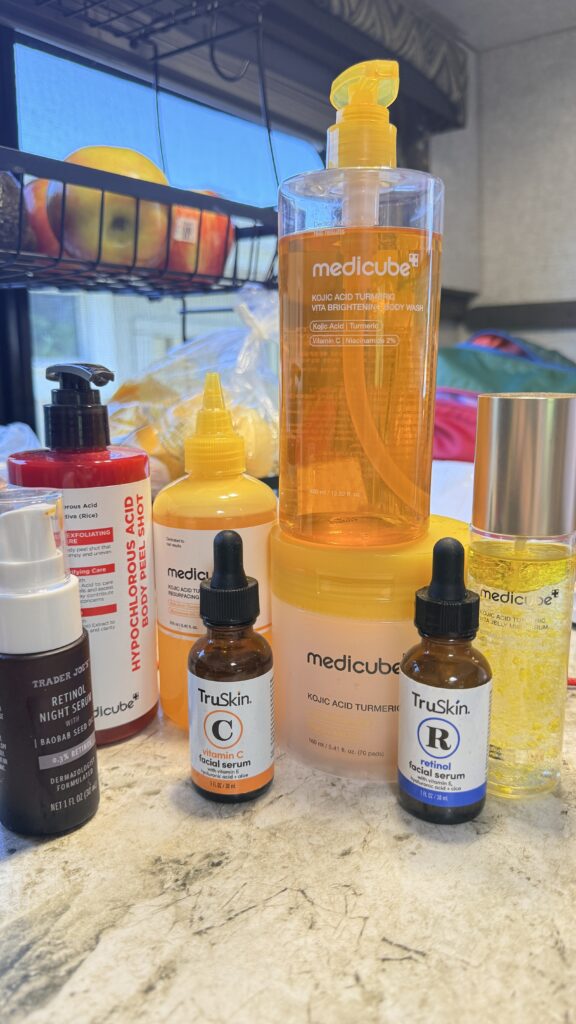
TruSkin Vitamin C & Retinol duo, my Medicube Set consisting of body peel shot, Jelly Mist Serum, Kojic Acid Turmeric Brightening Body Wash, Clarity Duo for Troubled Skin & my Trader Joe’s Retinol Night Serum, you can get at your local store.
What I Don’t Do and Why
I don’t use prescription treatments for my vitiligo. The options that exist, including topical corticosteroids, calcineurin inhibitors, and light therapy, are legitimate clinical approaches, and a dermatologist can discuss whether any of them make sense for a specific situation. For mine, with the patches stable and not dramatically expanding. But I do use LED NIR Light Therapy Devices. I love them and they do seem to help my skin in general.
I don’t camouflage the patches either. They’re there. In summer they’re visible. I’ve made peace with them as part of how my skin looks, and that’s felt like the right place to land for now.
What I focus on is supporting the systems that research suggests matter, the gut microbiome, the immune environment, and the skin itself. Whether that has any direct effect on the vitiligo specifically, I can’t say with certainty. What I know is that it supports my health in a dozen other documented ways, and the gut-skin axis research gives me one more reason to stay consistent.
If you’re dealing with something similar and haven’t looked at your gut health picture, the signs of poor gut health post is a good starting point for seeing the full picture of what your gut might be telling you.
Frequently Asked Questions About Vitiligo and Gut Health
Is vitiligo connected to gut health?
Research increasingly supports a connection. Multiple studies have found measurable differences in gut microbiome composition between people with vitiligo and healthy controls, including reduced diversity and lower levels of specific bacterial strains. The gut-skin axis, the bidirectional communication system between gut microbiome and skin health, is now a recognized area of study in vitiligo research. This doesn’t mean gut health changes cure vitiligo, but the immune connection is real and documented.
What causes white patches on skin?
The most common cause of distinctly white, depigmented patches is vitiligo, an autoimmune condition where the immune system attacks melanocytes, the cells that produce skin pigment. Other conditions that can cause lighter patches include tinea versicolor, a fungal infection, and pityriasis alba, which is more common in children. A dermatologist can distinguish between these conditions if you’re unsure what you’re dealing with.
Does vitiligo get worse over time?
It varies significantly. Some people experience stable patches that don’t expand. Others see progressive spreading. Some notice periods of activity followed by long stretches of stability. There’s no reliable way to predict the course for any individual. Managing the autoimmune environment, including gut health, sun protection, and stress, may support stability, though the research on interventions is still developing.
Can you have vitiligo on fair skin?
Yes. Vitiligo occurs across all skin tones. On fair skin it’s often less visible because the contrast between the depigmented patches and surrounding skin is lower. Sun exposure makes it more apparent as surrounding skin tans and patches don’t. In winter or when skin isn’t exposed to sun, the patches can be nearly invisible on fair skin, which sometimes makes people think the condition has improved when it hasn’t.
What skincare ingredients support skin tone with vitiligo?
For the skin surrounding patches, vitamin C serums support brightening and collagen production. Kojic acid and turmeric-based ingredients are used for general tone support. These aren’t treatments for the patches themselves but support overall skin health and appearance. Broad-spectrum SPF is essential because depigmented skin burns faster and more severely than pigmented skin due to the absence of protective melanin.
Have you noticed white patches on your skin and ever connected it to anything else going on in your body?
This post is for informational purposes only and is not a substitute for professional medical advice. If you’re experiencing changes in your skin pigmentation, consult a dermatologist for proper evaluation and diagnosis.
Disclosure: GutBeautyBody content is written from personal experience and research. We are not medical professionals. All factual health claims are sourced from peer-reviewed research and reputable health organizations. Read our full Medical Disclosure here.
Disclosure: This post contains affiliate links. If you purchase through our links we may earn a small commission at no extra cost to you. We only recommend products Wendy personally uses and believes in. Read our full Affiliate Disclosure here.