
Shawn is 56 and I’m 52, almost 53, We’ve lived together for almost 30 years, eat a lot of the same food, and have almost completely opposite energy.
I’m steady all day. He’s up at 3 AM and napping by mid-morning. Some days, we have zero energy.
There’s no single version of what energy looks like. Two people the same age can be tired for completely different reasons, at completely different times of day, and both can be totally normal.
Some of our friends, who are our age, all complain about different energy levels. ALL OF THEM.
Having no energy after 50 is rarely one cause. It’s a mix of mitochondria becoming less efficient at producing cellular energy, hormones declining, nutrient absorption dropping, and common deficiencies like B12, iron, and magnesium quietly draining you in the background. Add poor sleep or the wrong foods, and it compounds fast.
Disclosure: This post contains affiliate links. If you purchase through our links we may earn a small commission at no extra cost to you. We only recommend products Wendy personally uses and believes in. Read our full Affiliate Disclosure here.
Where did your energy go
Your cells make energy in tiny structures called mitochondria, and as you age, they become less efficient at it. According to Cleveland Clinic, fatigue after 50 isn’t just normal aging. It’s often driven by something specific and fixable: anemia, thyroid changes, hormone shifts, or mental health. Research on aging also shows that common deficiencies in iron, B vitamins, and magnesium directly accelerate the decline in your cells’ energy production. When you don’t have the raw materials, your body can’t make the fuel.
So before you write it off as “just getting older,” it’s worth figuring out which lever is actually pulling your energy down. For most people, it’s more than one.
My Energy And Shawn’s Are Nothing Alike
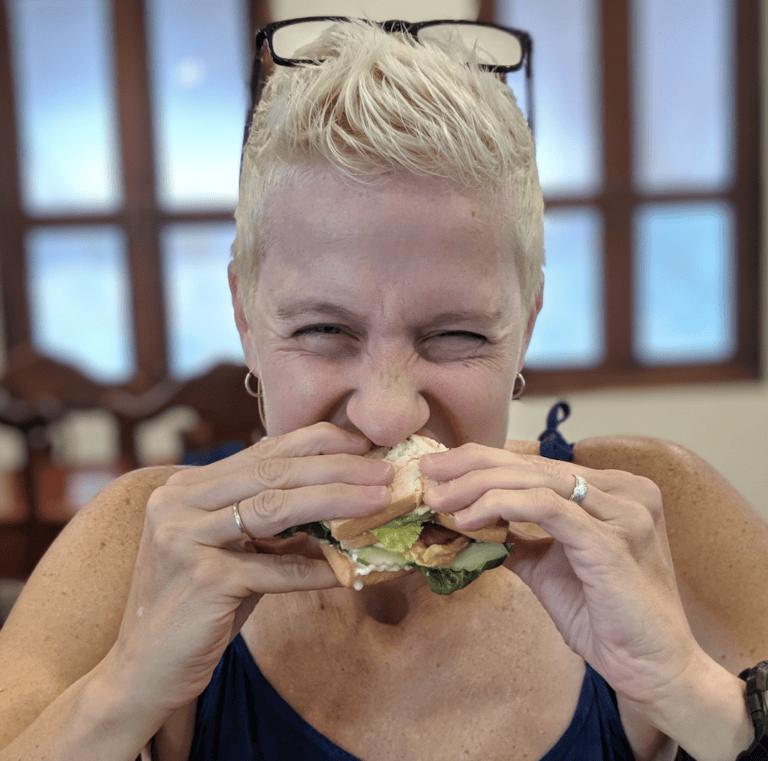
I feel my best pretty much all day long.
Around 7 or 8 PM, I start to wind down and get tired, but I don’t hit a wall the way Shawn does. My energy is even. It always has been, unless I let my food choices catch up with me or I sleep badly the night before. Those are really the only two things that knock me off my baseline. As I’ve gotten older, I can’t hang like I use to though.
Shawn is a different machine entirely.
He’s been awake since 3 or 4 AM because that’s just his internal clock. By mid-morning he needs to close his eyes for 30 to 90 minutes. Once he’s had that nap, he’s good until about 6 or 7 PM.
He’s been like this since I met him 30 years ago, and honestly, it works for him. The nap isn’t a sign that something’s wrong. It’s how he manages an early-rising body.

Shawn’s Two Energy Crashes, Food and Boredom
Shawn crashes for two reasons, and only one of them is what you’d expect.
The first is food. If he doesn’t eat, his energy bottoms out. That one’s straightforward.
He also crashes when he’s bored.
God forbid he has nothing to do or focus on. He gets restless. He fidgets. He needs to run an errand or go for a walk or find some kind of project. When he has nothing to channel his energy into, it doesn’t build up. It drains out. He gets tired from doing nothing.
That’s worth sitting with, because a lot of what gets called low energy after 50 isn’t exhaustion at all. It’s understimulation. If you’re retired, or your kids are grown, or your days lost their structure, your tiredness might not be physical. It might be that your brain and body don’t have enough to push against.
Is it different because he’s a man, and does genetics come into play here, too?

How Food Quietly Drains You
When I eat a greasy or carb-heavy meal, I feel it. I get lazier. Sluggish. I want to sit down and do nothing.
Heavy, refined-carb meals spike your blood sugar and then drop it, and that crash lands as fatigue. After 50, your body handles those swings less gracefully than it used to. The same lunch that powered you through your 30s can flatten you now.
This is also where making sure you get enough protein each day comes back into the picture. When I’m not getting enough protein, my energy tanks and I get lightheaded. Protein steadies the blood sugar swings that carbs set off. The two work together, and when I get the balance wrong, my energy is the first thing that tells me.
The Coffee Problem I Know I Need to Fix
I drink two large coffees every morning.
I’m trying to cut back to one, but it’s a habit I’ve had for decades, and decades-old habits don’t go quietly. I know I should. My stomach knows I should.
Since my surgery, I have a sensitive stomach and intestinal tract, and all that acidity isn’t doing me any favors. I get ulcers when I’m not paying attention. Two big coffees a day is a lot of acid to pour into a system that’s already touchy.
I’ve looked into lower-caffeine alternatives, something warm to hold in the morning that doesn’t hit my stomach as hard or give me the heavy caffeine jolt. I haven’t fully made the switch, but I’m working on it.
One thing that has changed on its own is soda. I drink almost none compared to when I was younger. It just doesn’t taste as good anymore, and it hits me differently. I get the rush and then feel icky. My body stopped pretending it was a good idea, even when my brain still reaches for it sometimes.

The Deficiencies That Sneak Up After 50
I have a handful of deficiencies that come and go if I’m not staying on top of them. B12. Magnesium. Potassium. Iron when I’m not actively supplementing it.
Part of that is from my gastric bypass 17 years ago. My body doesn’t absorb nutrients the way it used to, so things slip even when I’m eating well. According to research on B12 and aging, absorption drops for almost everyone after 50 because stomach acid production declines, and it drops even more for anyone with digestive surgery or low stomach acid. B12 deficiency shows up first as fatigue, and it gets brushed off as normal aging all the time.
These are the exact nutrients the research ties to cellular energy production. When iron, B12, or magnesium run low, your mitochondria can’t do their job, and you feel it as bone-deep tiredness that no amount of coffee fixes.
The only way I know which one is low is bloodwork. You can’t feel the difference between low B12 and low iron. They both just feel like being tired. If your energy has been off and you haven’t had labs done, that’s where I’d start, not with another supplement you’re guessing at.
The Brain Fog Nobody Could Explain
My brain fog hit hardest during perimenopause and menopause.
The problem was, I couldn’t tell what was causing it. I was going through a lot at the time. Family stress, financial stress, the works. Was the fog hormones? Aging? Stress? All three at once? I had no way to separate them.
It’s much better now. Some of that is being on the other side of menopause. A lot of it is being in a calmer season of life with less crisis pulling at me.
What I’ve learned is that for me, mental tiredness and physical tiredness are linked. When my brain is fried, my body follows. I just want to veg out. The fog and the fatigue come as a package.
Shawn doesn’t get brain fog. He just hits walls. Another reminder that no energy after 50 wears a different face on different people.
The Movement Sweet Spot
Here’s the part that sounds backwards. Moving too little drains your energy. Moving too much drains it too.
The research is clear that regular movement boosts the oxygen circulation that fuels your cells, which is why sitting all day leaves you more tired, not less. But I’ve also learned my own limit. After a long walk, I just want to sit down and lie around. I’m wiped. Shawn feels it too, but he bounces back faster than I do.
My best energy lives in the middle. Not sedentary, not overdoing it. When we were traveling and walking five to ten miles a day, that was sometimes too much, and I’d pay for it with sore feet or a plantar fasciitis flare-up. Since coming back to the states and getting more sedentary, we wrote about that shift in our weight gain after 50 post, the problem flipped to not moving enough.
The goal isn’t to move as much as humanly possible. It’s to find the amount that energizes you without wrecking you, and that amount is different for everyone.
What Actually Refills Our Tank
When we’re running on empty, the fix is almost always the same. Get out. Do something different from whatever drained us.
Sometimes that means a nap. Sometimes it means going to bed early and accepting that the day is over. Sometimes it means the exact opposite: getting up and out, running errands, taking our youngest kiddo, Sebastian, to the park, putting our bodies in motion, and our eyes on something other than a screen.
Hydration is part of it too. Even mild dehydration shows up as fatigue, and it’s the easiest thing to overlook. I drink at least one full 32-ounce water bottle a day with a sprinkle of sea salt in it, plus all the water I drink alongside my coffee. Shawn drinks far less plain water than I do, but he gets through two to four sparkling waters a day on top of his coffee.
None of this is a cure. Energy after 50 isn’t something you fix once and never think about again. It’s something you manage. Some days you get it right and feel great. Some days, the food or the sleep or the stress wins, and you ride it out.
Three of our Simple Six pillars feed directly into your energy. Nutrition, sleep, and movement. When those three are working, the energy mostly takes care of itself. When one of them slips, your energy is usually the first thing to let you know.
If you’ve had no energy after turning 50 and can’t figure out why, start with the boring stuff before you blame your age. Get your bloodwork done. Look at what you ate today. Think about how you slept. Notice whether you’ve been too still or pushing too hard. The answer is usually hiding in one of those, not in a mystery diagnosis.
What drains your energy the most, and what actually brings it back for you? We want to know.
Disclosure: GutBeautyBody content is written from personal experience and research. We are not medical professionals. All factual health claims are sourced from peer-reviewed research and reputable health organizations. Read our full Medical Disclosure here.
Disclosure: This post contains affiliate links. If you purchase through our links we may earn a small commission at no extra cost to you. We only recommend products Wendy personally uses and believes in. Read our full Affiliate Disclosure here.