

A morning routine for energy doesn’t have to start with a workout. Mine starts before I’ve even stood up, and it’s made more difference than anything I’ve tried that required more effort.
Disclosure: This post contains affiliate links. If you purchase through our links we may earn a small commission at no extra cost to you. We only recommend products Wendy personally uses and believes in. Read our full Affiliate Disclosure here.
For most of my life, I woke up and just started doing whatever I needed to do. Get a kid up for school, start coffee, respond to emails, etc.
I had never given thought to HOW I should start my day or what I needed to do to get my body and brain ready for the long day and evening ahead.
Once I hit my late 40s, I noticed that I creaked more and woke up tight and sore. Menopause hit, so I blamed a lot of it on my changing body and hormones. But last year, I started having foot issues and years of waking up to a body that felt tense and uncooperative. I started paying attention to what I was actually doing in the first thirty minutes of my day and whether any of it was setting me up for energy or draining it before I even got started.
Why Does Morning Feel So Hard Even After a Full Night of Sleep?
The reason you can sleep seven or eight hours and still feel wrecked when you wake up comes down to two things. The first is sleep quality, not just duration. The second is what’s happening in your body in the first thirty to forty-five minutes after waking. Your cortisol levels rise sharply in that window, a process called the cortisol awakening response, which is supposed to give your body a natural energy surge to start the day. When that response is blunted by poor sleep, chronic stress, or a morning routine that works against it, the day starts in a deficit that’s hard to recover from. The fix isn’t always more sleep. Sometimes it’s what happens in those first forty-five minutes.
Both men and women experience this. Shawn’s up at three or four in the morning most days and his energy is consistent because his first hour is dialed in. My schedule is different but the principle is the same. The morning shapes the day. What you do first matters.
If low energy is a pattern beyond just mornings, this energy post goes deeper into what’s actually driving it.
What I Do Before I Ever Stand Up
I don’t get out of bed the way most people get out of bed. I prepare my body for it first.
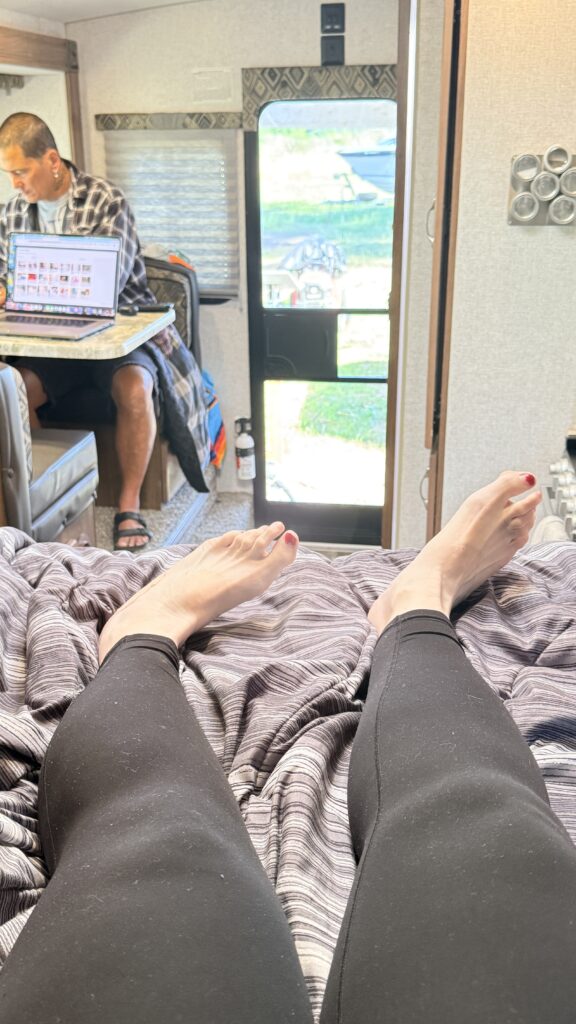
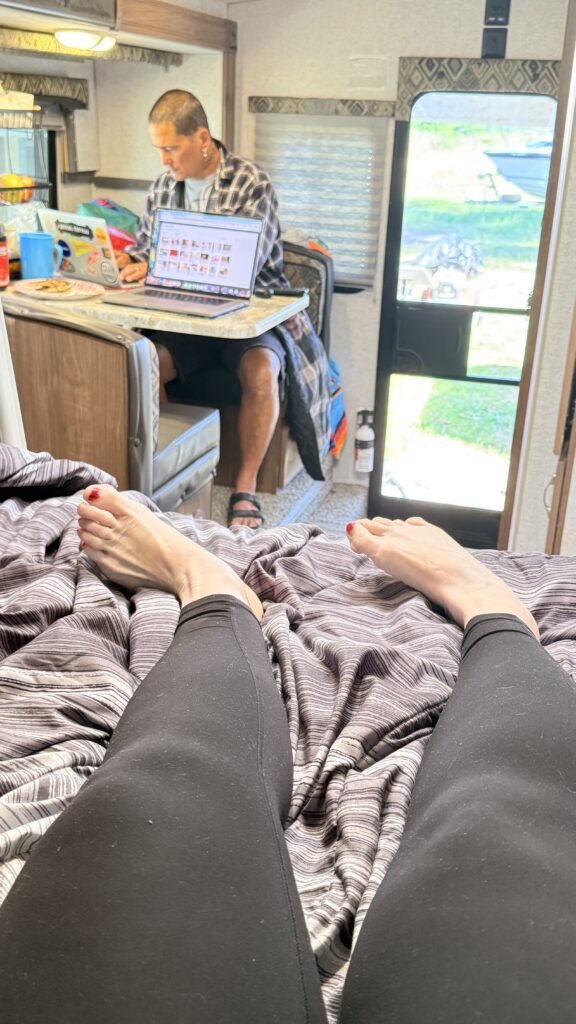
Before I put my feet on the floor, I perform a sequence of foot, ankle, leg, hip, and back movements while still lying in bed. It’s my lazy but effective exercise routine. Not a full workout. Not stretching in any dramatic sense. Just waking up the joints and muscles that will be asked to carry me through the day, so they’re not tense and cold when I first ask them to work.
This came from my plantar fasciitis experience. I learned the hard way what happens when you roll out of bed and immediately put full weight on feet and legs that haven’t been prepared for it. The foot work I do before standing has become non-negotiable. You can read more about what changed with my foot health and why this matters more than most people realize.
And, I also do toe exercises on the toilet. Is that TMI? Maybe, but I want to share what I actually do. Toe scrunches. Alternating big toe lifts. It sounds ridiculous until your feet have given you enough problems that you’ll do anything reasonable to avoid going back there. I am a morning pooper, and I’m not a 30-second type of toilet girl. The restroom is my quiet place. By the time I’ve finished my morning bathroom routine, my feet and legs are actually warmed up rather than shocked into action.


What’s In My Morning Coffee and Why It Goes First
Before I wash my face, before I check anything, I make my coffee. And into that coffee goes a scoop of creatine and a scoop of NeoCell Collagen Peptides powder
I drink it in bed. That’s intentional. I give myself time to actually wake up before I start performing the day. Phone gets checked, emails get scanned, social gets scrolled, the calendar gets looked at. Not because any of that is urgent but because knowing what the day holds before I’m in the middle of it means I’m not reacting all day. I’m moving through something I already have a handle on.
The creatine and collagen in the coffee mean that two of my most important supplements are in place before I’ve even stood up, without adding a single extra step to my morning. No separate pill routine. No mixing anything at the counter. It’s already done before the day starts. You can read more about why I added creatine specifically and what changed when I did.
Natural light matters too. Research on the cortisol awakening response consistently shows that morning light exposure within the first hour of waking significantly supports that natural cortisol peak, which translates directly to energy and alertness. I’m not rigid about this but getting near a window or outside in the morning is something I try to do early rather than late.


What Comes After the Coffee
Once I’ve had enough time to actually feel awake, I get up, wash my face, and go through my morning skincare routine. If you want to see exactly what that looks like, I’ve written about it in detail here.
Then it’s Sebastian. Breakfast, lunch packed, backpack checked, summer camp or school ready to go. That chunk of the morning is where the actual logistical energy goes, and having the first part of my morning to myself before it starts means I’m not running on fumes by the time I need to be useful to someone else.
Movement has always felt like something I had to force myself to do, and I’ve never loved working out. But after my foot issues and dealing with menopause weight gain, I’ve gotten honest with myself about the fact that it isn’t optional anymore. The gym after drop-off is the plan. It doesn’t have to be dramatic. It just has to happen consistently so I can keep up with our 8-year-old.

Shawn’s Morning, Which Looks Nothing Like Mine
Shawn is up at three or four in the morning. Most mornings, sometimes earlier.
His first thing is coffee and work. Day trading research, business tasks, anything that requires focus and a quiet house. He’s not a slow-start person. He gets up and moves into his work almost immediately, which works for him because that’s his natural rhythm and he’s been doing it long enough that his body has adjusted.
When the light comes up he walks. At least a mile, every single morning. More if the day allows it. The walk isn’t optional for him either. It’s where his morning settles. More coffee when he gets back.
Breakfast is eggs with something, or yogurt with nuts and maybe a little honey. He doesn’t eat elaborate breakfasts, and he doesn’t overthink it. Protein, some fat, and some whole foods.
He won’t shower until he’s had his morning poop. He’s very clear about this. The order matters to him, and he doesn’t apologize for it. There’s actually some legitimacy to this from a circadian standpoint; morning digestion follows a natural rhythm, and fighting it by showering first and rushing the process makes the morning feel worse.
Two completely different morning routines. Both of us use the morning intentionally. That’s the part that matters more than any specific sequence.
Do you have a set routine, or are you just getting up and addressing each morning as it comes?
What We Both Stopped Doing in the Morning
Neither of us starts the morning reacting to other people’s urgency. No immediately answering messages, no jumping into whatever came in overnight, no letting the day pull us before we’re ready for it.
We both stopped eating breakfast that spikes blood sugar fast and crashes it by mid-morning. That pattern wrecks energy and cravings for the rest of the day in a way that’s hard to recover from. Protein and fat at breakfast creates a longer, more stable energy curve than carbohydrates alone.
And we both stopped treating sleep as something to minimize. The morning starts the night before. How you sleep determines what cortisol does in the morning, which determines how much energy you actually have. Magnesium glycinate at night has been one of the most consistent tools for both of us in actually getting the sleep that makes the morning feel possible.
Frequently Asked Questions About Morning Routines for Energy
What’s the most important thing to do first thing in the morning for energy?
Get light and get hydrated before you get caffeine. Natural light exposure within the first hour of waking supports the cortisol awakening response that determines how alert you feel all morning. Hydration first thing addresses the dehydration that accumulates overnight and directly affects cognitive function and energy. Coffee after those two things works better than coffee as the very first thing.
Why do I have no energy in the morning even after sleeping well?
Sleep duration and sleep quality aren’t the same thing. You can spend eight hours in bed and still not get restorative sleep if you’re waking frequently, running high cortisol, dealing with blood sugar fluctuations overnight, or deficient in nutrients like magnesium or B12 that affect sleep architecture. If consistent morning fatigue is a pattern despite adequate time in bed, it’s worth looking at sleep quality and nutritional status rather than just trying to sleep longer.
Should I work out in the morning for more energy?
It depends on your body and your cortisol situation. For some people, morning movement is genuinely energizing. For others, especially those with already-elevated cortisol or who are in a high-stress period, intense morning exercise can spike cortisol further and leave them depleted by midday. A moderate walk in the morning tends to be universally beneficial. Intense training is better placed based on your individual energy and recovery patterns.
What should I eat in the morning for sustained energy?
Protein and fat create a more stable energy curve than carbohydrates alone. Eggs, yogurt with nuts, protein powder in coffee, or any combination of real protein with some fat gives the body something to work with that doesn’t spike blood sugar and crash it an hour later. If you’re adding creatine and collagen to your morning coffee, you’re already starting with protein before you’ve cooked anything.
Does a morning routine actually make a difference for energy?
Yes, but not because of any specific ritual. It makes a difference because it creates a consistent signal that the day has started on your terms rather than everyone else’s. The cortisol awakening response is more reliably supported by a consistent wake time and morning sequence than by a chaotic, variable morning. Predictability in the first hour of your day trains your nervous system to start in a calmer, more ready state. That accumulates over time into noticeably different energy.
What’s the one thing you do in the morning that you think actually sets the tone for your energy for the rest of the day? And is your routine working for you, or does it need an overhaul? Let us know.
Disclosure: GutBeautyBody content is written from personal experience and research. We are not medical professionals. All factual health claims are sourced from peer-reviewed research and reputable health organizations. Read our full Medical Disclosure here.
Disclosure: This post contains affiliate links. If you purchase through our links we may earn a small commission at no extra cost to you. We only recommend products Wendy personally uses and believes in. Read our full Affiliate Disclosure here.






Great content! Keep up the good work!
Thanks! Appreciate your support