Prebiotics vs probiotics vs postbiotics, most people only know about 2 of them. Here’s why the third one is actually the most important piece, and what I noticed when I stopped leaving it out.
Disclosure: This post contains affiliate links. If you purchase through our links we may earn a small commission at no extra cost to you. We only recommend products Wendy personally uses and believes in. Read our full Affiliate Disclosure here.
I’ve been taking some form of probiotic for years. Capsules, fermented foods and drinks, Bulgarian yogurts, different brands, different strains. It felt like the right thing to do for gut health, so I did it.
Then about two years ago I started getting products sent from wellness brands, and one of them introduced me to something I hadn’t heard of: postbiotics. I genuinely didn’t know they existed. I knew pre and pro. I didn’t know post.
Once I understood what postbiotics actually are and how the three work together, it changed what I was looking for in a gut health supplement entirely. The difference in how I feel is real enough that I’m not going back.
What’s the Actual Difference Between Prebiotics, Probiotics, and Postbiotics?
Prebiotics are fibers and compounds that your body can’t digest. They pass through the digestive system intact and reach the colon, where they serve as food for the beneficial bacteria living there. Think of them as fertilizer for your gut.
Probiotics are the live beneficial bacteria themselves, the ones that take up residence in your gut and do the actual work of balancing your microbiome, supporting digestion, modulating the immune system, and reducing inflammation.
Postbiotics are what probiotic bacteria produce when they ferment prebiotics, bioactive compounds including short-chain fatty acids, enzymes, peptides, and vitamins that have direct benefits for your health. You need all three because each one enables the next. Prebiotics feed probiotics. Probiotics produce postbiotics. Postbiotics are the end product the whole chain is working toward.
This applies to men and women equally. Gut microbiome health affects immune function, energy, mental clarity, skin, weight, sleep, and inflammation regardless of gender.
If you’re already dealing with poor gut health, understanding all three biotics, or Tribiotics, is a better starting point than picking just one and hoping it works.
Why Most People Have Never Heard of Postbiotics
Postbiotics are the newest of the three to be formally defined. The International Scientific Association for Probiotics and Prebiotics didn’t establish the official consensus definition until 2021. Which means most of the public awareness around gut health, including what your doctor has probably told you, predates the mainstream conversation, including postbiotics.
Search interest in postbiotics has grown roughly 55% over the past year. The market for postbiotic supplements is projected to grow significantly through the end of the decade. The science is moving fast and consumer awareness is catching up.
What postbiotics actually are is the byproducts of fermentation. When probiotic bacteria consume prebiotics, they produce bioactive compounds including short-chain fatty acids like butyrate, enzymes, peptides, B vitamins, and vitamin K. These compounds are what directly interact with your gut lining, your immune system, and your inflammatory pathways. Research links postbiotics to reduced gut inflammation, stronger intestinal barrier function, improved immune response, and better metabolic outcomes.
The reason people feel gut health benefits from fermented foods isn’t only the live bacteria. A significant part of it is the postbiotics those foods naturally contain from the fermentation process itself. Yogurt, kefir, sauerkraut, kimchi, all of these deliver postbiotic compounds alongside whatever probiotic strains are present.
The NIH review on prebiotics, probiotics, and postbiotics covers the full mechanism and the emerging research on all three if you want to go deeper before deciding what to try.
Why All Three Together Work Better Than Any One Alone
A tribiotic combines all three. Pre, pro, and postbiotics in one supplement designed to work as a complete system rather than isolated pieces.
The research on combination approaches shows consistently better outcomes than single-component supplementation. A study published in the journal Nutrients found that combining prebiotics and probiotics enhanced probiotic survival and adhesion in the gut, resulting in more significant positive impact on gut health than either alone. Adding postbiotics to that combination means you’re not just setting the environment up for the bacteria to thrive, you’re also delivering the end-product compounds directly.
For people who’ve tried probiotics and never felt much difference, this is often why. The probiotic had nothing to feed on and nothing to produce. The chain was broken before it started. A probiotic without prebiotics is like planting seeds in soil with no nutrients. Something goes in. Not much grows.
If you’re dealing with persistent bloating or digestive issues that haven’t improved with a standard probiotic alone, adding prebiotics and postbiotics to the equation gives your gut a much better chance of actually shifting.
What I Take and What I Noticed With Arrae
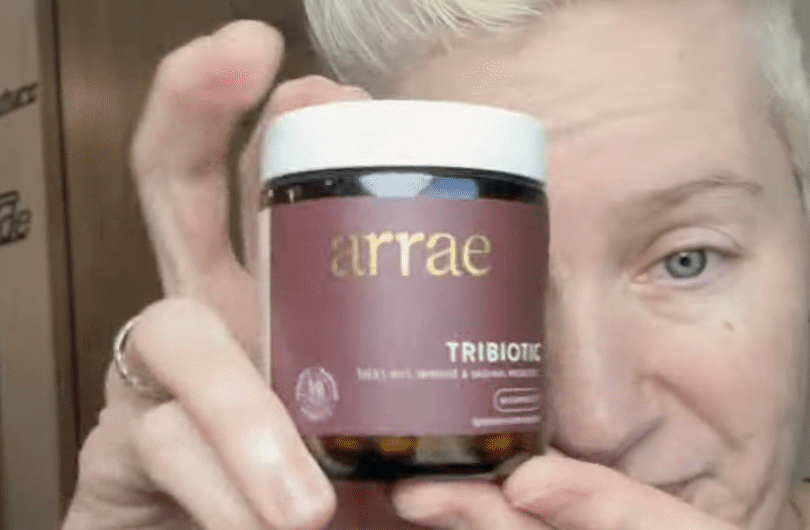
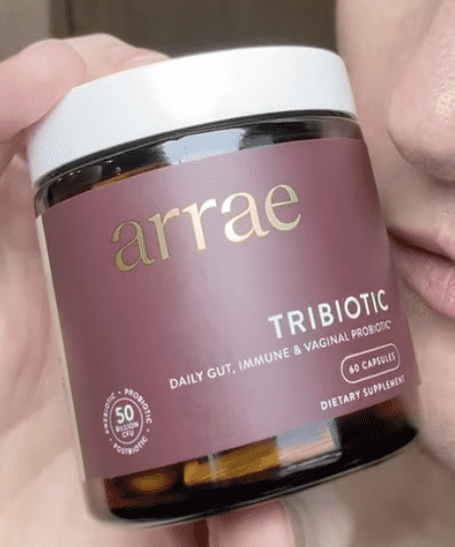
My favorite tribiotic right now is Arrae. I can feel the difference when I’m taking it consistently versus when I’m not. That’s the bar I use for any supplement, and Arrae clears it.
I take it at night. Nighttime is better for probiotics because your gut is less active and the bacteria have more time to establish before your next meal comes through. I don’t take it every single night, I’m human, but when I’m consistent I notice less bloating, better digestion, and a general sense that things are moving the way they should.
The fact that it includes postbiotics is what made me try it in the first place. I wasn’t looking for another probiotic. I was looking for something that addressed my entire system. Pre, pro, and post together are different from just pro alone, and my gut confirmed that pretty quickly.
Shawn’s Approach, and Why It Works for Him
My husband doesn’t take a tribiotic. He doesn’t even take a probiotic supplement most of the time.
His approach is yogurt and fermented foods. Yogurt with nuts and sometimes a little honey. It’s not a medical decision. It’s just what he eats and what makes him feel good.
During our full-time world travels, we visited Bulgaria in 2017 and went on a free food walking tour in the capital, Sofia. At one stop, we were given tiny cups of yogurt with dill. We learned that there is a special culture strain found only in Bulgarian yogurt that dates back 4000 years.
And, we were staying at Airbnb’s that served a lot of fermented foods each morning. He was loading up on all the goodness and was feeling his very best.
Ever since then, he’s focused on changing up the cultures and fermented foods because he doesn’t like taking supplements
Yogurt with live cultures delivers real probiotic strains, and it’s a whole-food source that also provides protein and prebiotics through the other things he’s eating.
When his gut is actually giving him trouble, he’ll take a capsule probiotic for a week when I force him to, and then stop. It works for him. He’s not trying to optimize his microbiome. He’s trying not to feel terrible.
There’s nothing wrong with that approach. A consistent dietary source of probiotics beats an inconsistent supplement. The issue is that food sources alone don’t typically deliver postbiotics in a therapeutically meaningful way. If gut health is something you’re actively working to improve rather than maintain, a tribiotic covers more ground.
How to Tell If Your Gut Health Is Actually Improving
Less bloating is usually the first sign. Not zero bloating, because some gas is normal and fermentation is happening, but the kind of bloating that feels like distension or discomfort should reduce with consistent prebiotic and probiotic support.
More regular digestion without straining or urgency is another sign. Energy levels that don’t tank after meals. Clearer skin. Better mood. Less brain fog. These all connect back to gut health in ways that research is still mapping, but that most people who pay attention to their gut already notice in their own experience.
Give any gut health change at least 4 to 6 weeks before drawing conclusions. The microbiome doesn’t shift overnight. You’re working with a population of trillions of organisms that need time to rebalance.
The Mayo Clinic’s overview on probiotics and prebiotics is a good clinical reference if you want to understand the science before committing to a supplement.
Frequently Asked Questions About Prebiotics vs Probiotics
Should I take a prebiotic or probiotic first?
You don’t have to choose. Taking both together, or finding a tribiotic that combines pre, pro, and postbiotics, is more effective than either alone. If you’re starting with just one, prebiotics create the environment the probiotics need to survive. But the combination is where the real benefit shows up.
What’s the best time to take probiotics?
Nighttime tends to work well because digestive activity slows and the bacteria have more time to establish in the gut before your next meal. Some strains are designed to be taken with food. Check the specific instructions for whatever you’re taking, but consistency matters more than perfect timing.
Can you get enough probiotics from food alone?
For general maintenance, yes. Yogurt with live cultures, kefir, sauerkraut, kimchi, and other fermented foods deliver real probiotic strains. The challenge is consistency and strain diversity. Food sources don’t typically deliver postbiotics in therapeutic amounts. If you’re actively working to improve gut health rather than just maintain it, a tribiotic supplement adds what food sources alone don’t consistently provide.
What are postbiotics found in?
Postbiotics are produced when probiotic bacteria ferment prebiotics, so fermented foods naturally contain them. Yogurt, kefir, and other fermented products all contain some postbiotic compounds. Dedicated postbiotic supplements or tribiotics that include postbiotics deliver them in more concentrated, consistent amounts than most food sources.
Do men need prebiotics and probiotics too?
Yes. Gut microbiome health affects immune function, inflammation, energy, mood, and metabolic health in men exactly as it does in women. Men tend to approach it differently, often relying more on food sources, but the physiological need is the same. If a man is dealing with consistent digestive issues, low energy, or skin problems, gut health is worth investigating regardless of how he chooses to address it.
Are you taking a probiotic, or something that combines all three, and have you noticed an actual gut difference?
Disclosure: GutBeautyBody content is written from personal experience and research. We are not medical professionals. All factual health claims are sourced from peer-reviewed research and reputable health organizations. Read our full Medical Disclosure here.
Disclosure: This post contains affiliate links. If you purchase through our links we may earn a small commission at no extra cost to you. We only recommend products Wendy personally uses and believes in. Read our full Affiliate Disclosure here.