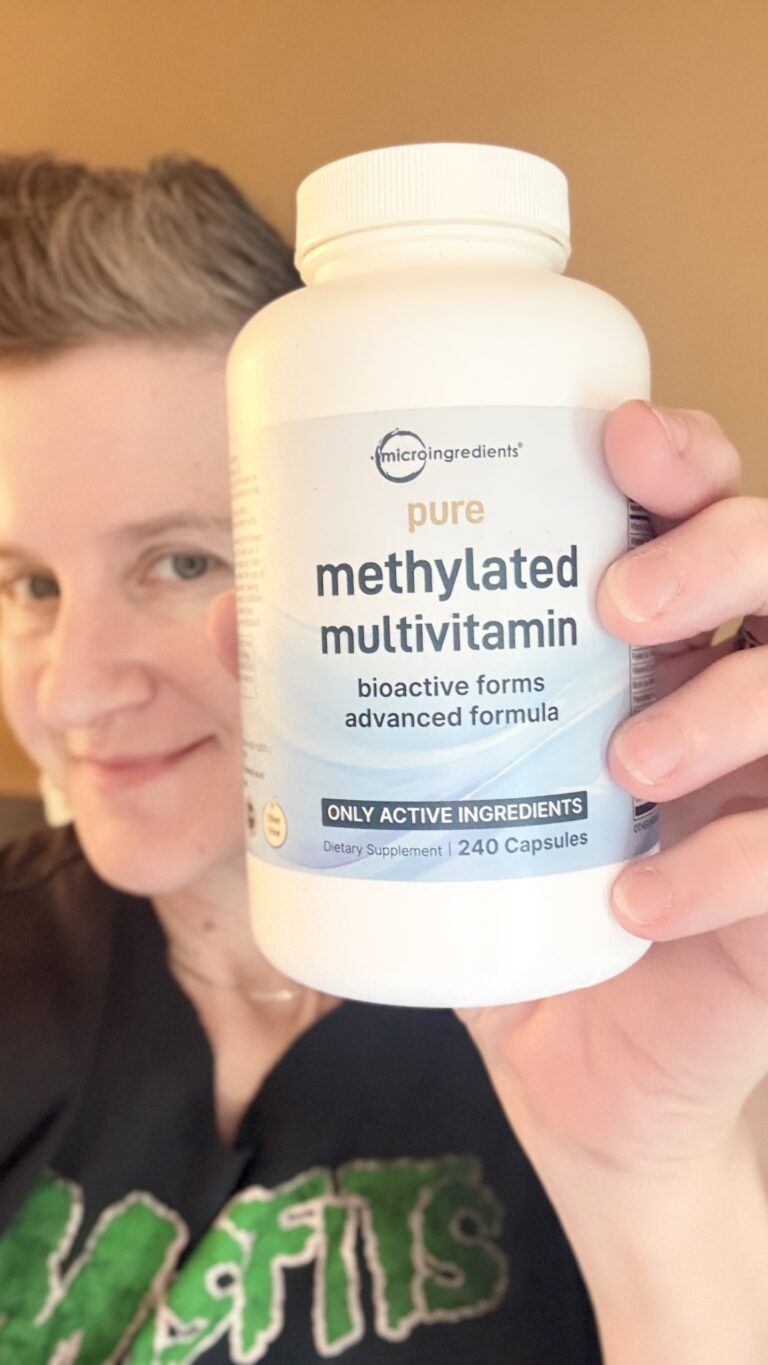
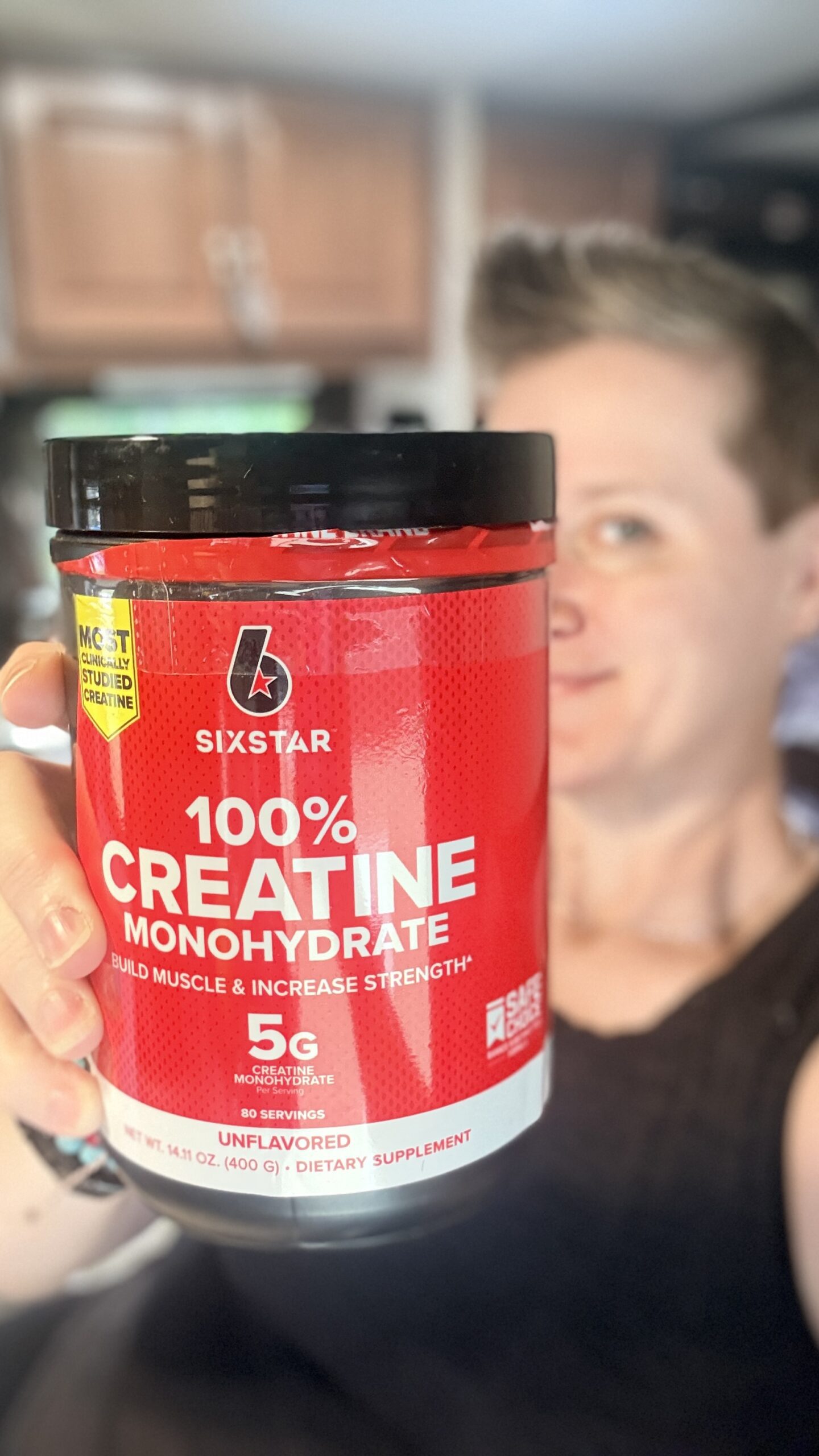
Creatine for women is one of the most researched supplements in history, and most women have never considered taking it. Here’s why I finally started, what changed almost immediately, and what it has to do with GLP-1s.
Disclosure: This post contains affiliate links. If you purchase through our links we may earn a small commission at no extra cost to you. We only recommend products Wendy personally uses and believes in. Read our full Affiliate Disclosure here.
I’d heard of creatine for years. I associated it with men at the gym trying to build muscle. It wasn’t something I thought about for myself. My husband even started using it a couple of years ago and told me I should try it for my muscle health. I looked at him and said, I don’t go to the gym, so why do I need it? And then I went on about my life for a year.
Then I listened to a podcast with Dr. Terry Dubrow on one of my favorite reality-trash entertainment shows, where he talked about the research history of creatine alongside GLP-1s. He was laying out decades of clinical evidence for both, and the way he framed creatine made me realize I’d been dismissing something that had more legitimate research behind it than most supplements I was already taking.
I added it to my morning coffee the next day. Within days, my leg muscles felt noticeably different. Less tightness. Better response when I moved. I wasn’t expecting to feel something that fast, but I did.
That’s what got me paying attention. Then I kept researching.
What Does Creatine Actually Do and Why Does It Matter for Women?
Creatine is a naturally occurring compound your body makes from three amino acids: arginine, glycine, and methionine. It’s stored primarily in skeletal muscle as phosphocreatine, which serves as a rapid energy reserve for muscle contractions. When your muscles need quick bursts of energy, phosphocreatine regenerates ATP, the energy currency your cells use, faster than other energy pathways can. This is why creatine has decades of research supporting its benefits for strength, power, and muscle performance.
But the reason it matters specifically for women, and particularly for women in midlife, goes beyond athletic performance. Women naturally have lower creatine stores in skeletal muscle than men, partly because they consume less of it through diet and partly due to hormonal differences. When estrogen declines during perimenopause and menopause, the hormones that help with creatine production and utilization decline with it. The body that was already working with lower creatine stores has even less to draw on.
Men over 50 also benefit from creatine. Declining testosterone creates similar muscle maintenance challenges and creatine is one of the few supplements with consistent evidence supporting lean muscle preservation in older men and women both.
Why Women Have Lower Natural Creatine Stores Than Men
It’s not just diet. Women produce less creatine endogenously than men due to differences in muscle mass and hormonal environment. Even women who eat plenty of protein from animal sources, where dietary creatine comes from, typically consume less than men because they eat less overall. One pound of uncooked beef delivers roughly one to two grams of creatine. The research-backed therapeutic amount for benefits in strength and body composition is around five grams a day. That’s essentially impossible to get through diet alone without supplementation.
This gap matters more as we age because muscle mass naturally declines with each passing decade. Research published in the Journal of Sports Medicine found that adults over 50 who combined creatine supplementation with resistance training gained an average of three pounds more lean muscle tissue than those doing the same training without creatine. That three pounds is metabolically significant. More muscle means a higher resting metabolism, better insulin sensitivity, stronger bones, and more functional capacity for everyday life.
What I Noticed When I Started and How Fast
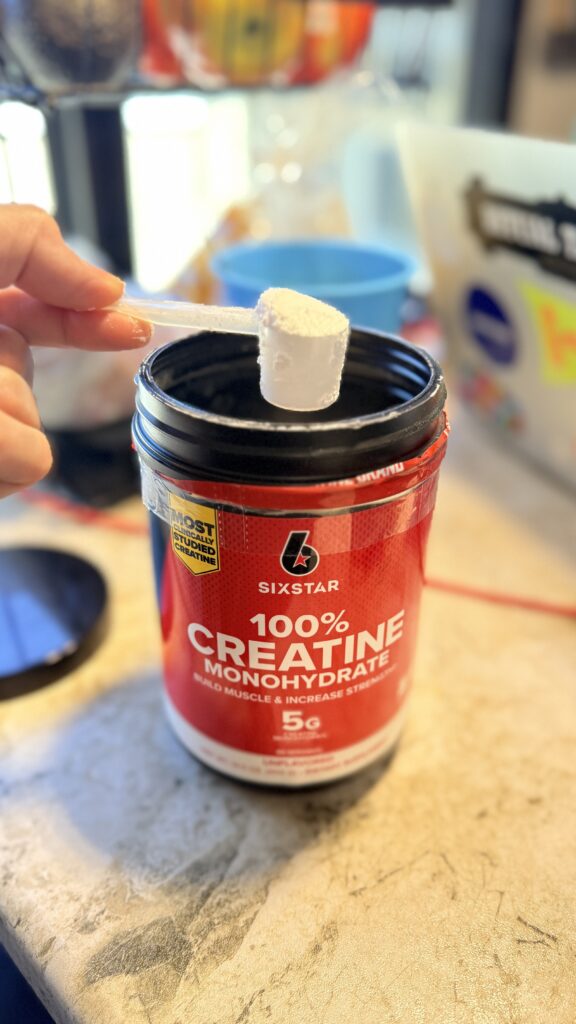
I mix one scoop of creatine into my morning coffee alongside my high-protein collagen powder. That’s it. One step, already built into something I’m doing anyway.
Within the first week, my leg muscles felt different. Less tight when I woke up. Better response when I walked or moved. I wasn’t doing anything else differently. The creatine was the only change.
I wasn’t expecting something that fast. The research suggests full muscle saturation takes a few weeks. But I noticed something within days, and it was enough to make me keep going.
And, I’ve committed to working out. We are in the process of relocating to Washington State after traveling the world full-time for the past 10 years, and once we get settled and have a gym membership, I will drop Sebastian off at camp or school and then head to the gym for resistance training.
Building the habit before I need to be lifting seriously means my muscles are already working with better creatine stores when I actually start training. That’s intentional.
The GLP-1 Connection, and Why I Changed My Mind
I was against GLP-1s for a long time. They felt like a shortcut, or at least something with enough unknowns that I wasn’t interested in being an early adopter.
Then I listened to Dr. Terry Dubrow talk about them differently than I’d heard anyone talk about them before. He wasn’t framing GLP-1s as a diet drug. He was framing them as a medication with decades of research in diabetic patients, where the clinical evidence on inflammation reduction, metabolic improvement, and weight management in non-diabetic patients is now becoming undeniable. The research history of GLP-1s, it turns out, is as deep as that of creatine. I just hadn’t been paying attention to the right sources. So then I started researching what Dr Dubrow shared, and my mind was changed.
I’m still dealing with menopause weight gain that isn’t responding the way I’d like to the changes I’ve already made. GLP-1s are now a real option I’m considering rather than something I’ve dismissed.
Here’s where creatine comes back in. One of the most significant concerns with GLP-1 medications is muscle loss. Studies from the STEP-1 semaglutide trials showed that up to 40% of weight lost on GLP-1 medications can come from lean body mass rather than fat. That’s a metabolic problem. Muscle is what keeps your metabolism running, protects your joints, maintains your bone density, and determines your functional capacity as you age. Losing it while losing fat isn’t a win.
Creatine is one of the most evidence-backed tools for preserving lean muscle mass during caloric restriction, which is exactly what GLP-1 medications create. If you’re on a GLP-1 or considering one, creatine isn’t optional. It’s the thing you take to protect what you’re trying to keep while you lose what you’re trying to lose.
We’ve written more about menopause weight gain specifically if you want to understand what’s driving that pattern before deciding what to do about it.
Creatine Is a Peptide, and Why That Word Is Being Misused Everywhere
Creatine is a peptide. So is every short chain of amino acids, which is what a peptide technically is. But the word peptide has been hijacked on social media to market compounds that have nothing close to creatine’s research history.
If you’ve spent any time on TikTok or Instagram in the past year, you’ve seen people talking about peptides like BPC-157, TB-500, CJC-1295, and others as if they’re the next revolution in health optimization. Some of these have legitimate early research. Some have almost none. Almost none have the safety profile or the depth of clinical evidence that creatine monohydrate has, which is backed by hundreds of peer-reviewed studies and over three decades of documented safe use.
That doesn’t mean every emerging peptide is dangerous. It means you can’t evaluate them the same way you evaluate creatine, because they don’t have the same evidence base. A content creator posting about their peptide protocol isn’t a clinical trial. Before trying any compound someone is enthusiastically promoting on social media, especially one that involves injection protocols or compounds that aren’t FDA-regulated supplements, do your own research from credible sources. Not the person selling it. Not the person who got paid to post about it.
Creatine is what it is because it’s been studied in rigorous conditions for decades. A 2021 review of over 500 studies confirmed it’s safe at recommended doses across all age groups with no documented harm to kidneys, liver, or overall health. That’s the bar. Hold everything else to it.
The Cleveland Clinic’s overview on creatine covers the evidence and safety profile clearly if you want a clinical reference point.
What to Look For When You’re Shopping
Creatine monohydrate is the form with the most research behind it. Other forms exist and are marketed aggressively, creatine HCl, buffered creatine, ethyl ester, but none of them have creatine monohydrate’s evidence base. There’s no research showing they’re better. There is research confirming monohydrate works. Start there.
Three to five grams daily is the research-supported dose. You don’t need a loading phase. Consistent daily use over several weeks achieves the same muscle saturation as loading, with less likelihood of the GI discomfort that high loading doses can cause. Consistency matters more than amount.
It dissolves easily in coffee or water. There’s no taste at the dose you’re taking. It requires no separate step if you’re already making a morning drink. That’s the easiest version of compliance there is.
You can also read more about the full supplement stack I use to see where creatine fits in the bigger picture.
Frequently Asked Questions About Creatine for Women
Will creatine make women bulky?
No. Building significant muscle mass requires high testosterone levels and deliberate heavy resistance training over extended periods. Women don’t have the testosterone levels to produce the kind of bulk that word implies. What creatine does is help maintain and gradually build lean muscle, which improves body composition, metabolism, and functional strength. It won’t make you look like a bodybuilder.
Does creatine cause water retention in women?
Creatine draws water into muscle cells, which is part of how it works. This is intracellular water in the muscle, not the puffy subcutaneous water retention people associate with bloating. Most women don’t notice a visible difference. Some experience a slight increase on the scale in the first week or two as muscles hydrate more fully. This isn’t fat. It isn’t bloat. It’s muscle doing exactly what you want it to do.
When should women take creatine?
Timing matters less than consistency. Morning works well because you can build it into an existing routine, like coffee, which makes it easy to remember. Some research suggests post-workout timing has a slight edge for muscle synthesis, but the difference is small. Taking it consistently every day at whatever time you’ll actually do it is what matters.
Is creatine safe for women over 50?
Yes. The 2021 comprehensive review of over 500 creatine studies confirmed safety across all age groups, including older adults, with no documented harm to kidney or liver function at recommended doses. Women with existing kidney conditions should consult their doctor before starting, which applies to any supplement. For healthy women over 50, creatine monohydrate at three to five grams daily has one of the strongest safety records of any supplement available.
Do men over 50 benefit from creatine too?
Yes. The same muscle preservation research applies to men. Studies consistently show that men over 50 who combine creatine with resistance training maintain and build more lean muscle than those who train without it. Declining testosterone creates similar muscle loss challenges to what declining estrogen creates in women, and creatine addresses the underlying cellular energy mechanism that makes muscle maintenance harder as testosterone drops.
Have you tried creatine or has it been on your radar, and what’s kept you from starting?
Disclosure: GutBeautyBody content is written from personal experience and research. We are not medical professionals. All factual health claims are sourced from peer-reviewed research and reputable health organizations. Read our full Medical Disclosure here.
Disclosure: This post contains affiliate links. If you purchase through our links we may earn a small commission at no extra cost to you. We only recommend products Wendy personally uses and believes in. Read our full Affiliate Disclosure here.