I used to fall asleep with my shows on and wake up at 2 AM with my phone still playing. I’d stumble to the bathroom, come back to bed, and then lay there. Eyes closed. Brain wide open.
Some nights I’d fall back asleep. Some nights I’d just accept my fate and lay there until morning.
My husband has a different version of the same problem. He wakes up and falls back asleep all night long. His internal clock has always had a 3- to 4 a.m. wake-up. He’s been this way since I met him 30 years ago. Add bathroom trips and late afternoon coffee to the mix, and his sleep looks nothing like mine.
Sleep after 50 changes because of declining melatonin production, hormonal shifts in estrogen and testosterone, less time spent in deep sleep stages, and daily habits that worked fine at 35 but stop working after 50. It’s not one thing. It’s everything shifting at once.
We’ve tried melatonin, magnesium in every version, cooling sheets, sleep cocoas, fans, heaters, and total darkness versus mood lighting. Some of it helped. Separate beds. Most of it didn’t. What actually made the difference was quite simple.
Why Does Sleep Get Worse After 50
Your body produces less melatonin as you age, the hormone that signals your brain it’s time to wind down. According to the Sleep Foundation, older adults spend more time in lighter sleep stages and less time in the deep, restorative phases. Your circadian rhythm shifts forward, making you tired earlier in the evening and awake earlier in the morning. By 50, deep sleep drops from 10 to 20 percent of your total sleep to roughly 5 to 7 percent.
That’s the phase where your body actually repairs itself. When it shrinks, you can sleep eight hours and still wake up feeling like you barely rested.
For women, menopause accelerates everything. According to Australia’s Woolcock Institute, over 60 percent of postmenopausal women report insomnia symptoms. Estrogen and progesterone decline disrupts your sleep cycle, your body’s temperature regulation, and your melatonin production on top of the decline that’s already happening from aging.
For men, the issue is testosterone. Research from the University of Montreal found a direct link between testosterone levels in men over 50 and their ability to reach deep sleep. Lower testosterone means less synchronization in the brain, which means less of the deep sleep your body needs to recover.
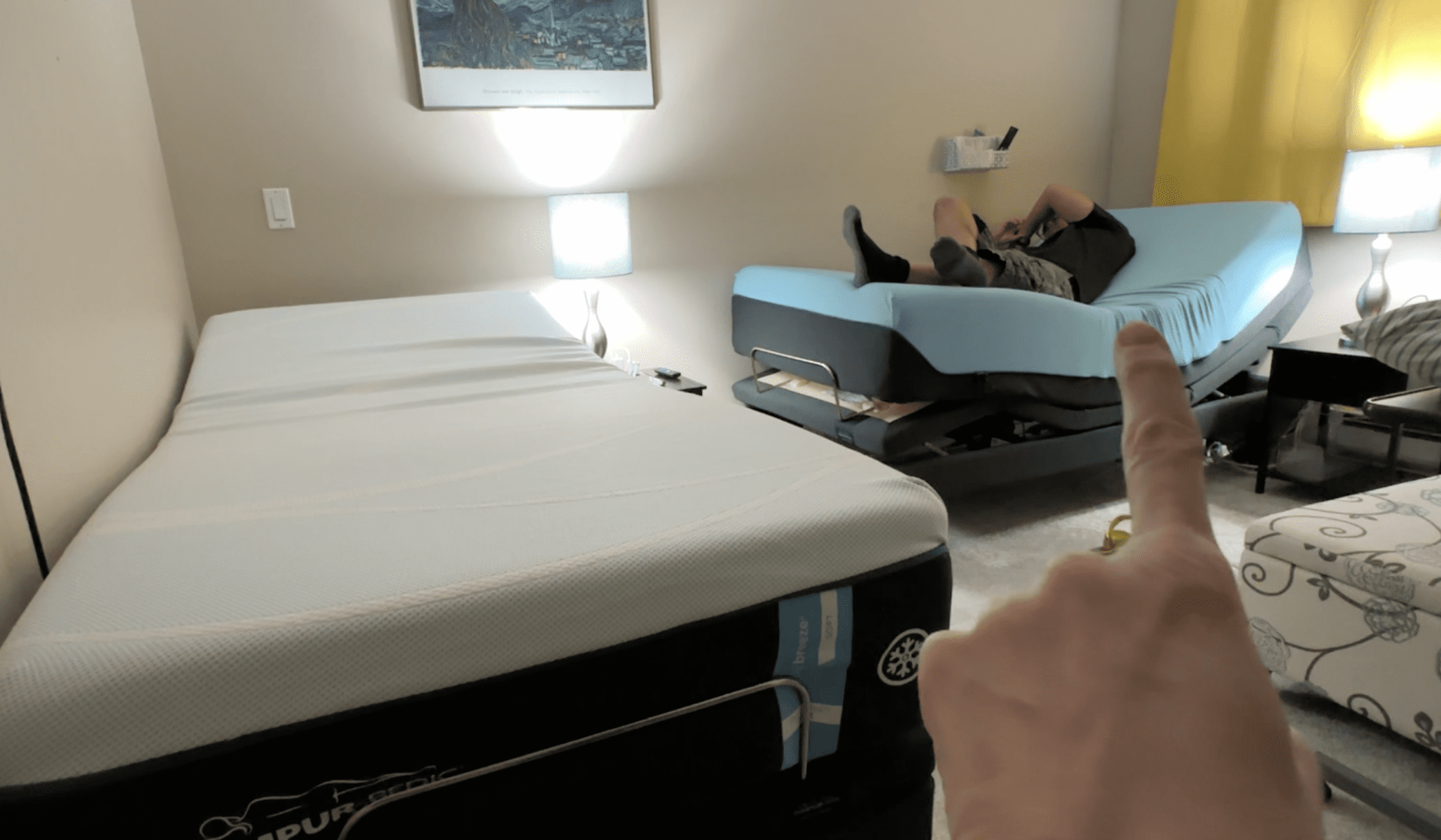
Shawn and I are in the same bed, dealing with two completely different biological problems and arguing over the room temperature and blankets.
Why Shawn and I Need Completely Different Things to Sleep
I want the room to be cold. Like, cold cold. Lots of blankets were piled on top of me. Complete darkness. No light, no glow, nothing. Like those babies in Finland in their strollers in winter with just their faces exposed.
Shawn wants a warmish room. Not too hot, not too cold. Light blanket. Mood lights like he’s underwater in the room. He tosses his covers on and off all night long, no matter the temperature.
We have tried everything to find a middle ground.
I got him eucalyptus cooling sheets. Then bamboo sheets. Then a cooling blanket I found on TikTok that was supposed to solve everything. It was cooling. It was also polyester. He hated it.
The one thing that actually worked for a while was an Eddie Bauer throw we picked up during our RV adventures near the Snake River area by Yellowstone. One side was soft like lambswool and the other was a cool, crinkly fabric. The warm side would face him and he could stick his leg out and touch the cool side. That throw understood the assignment.
We’ve done fans. AC. Heaters. Combinations of all three.
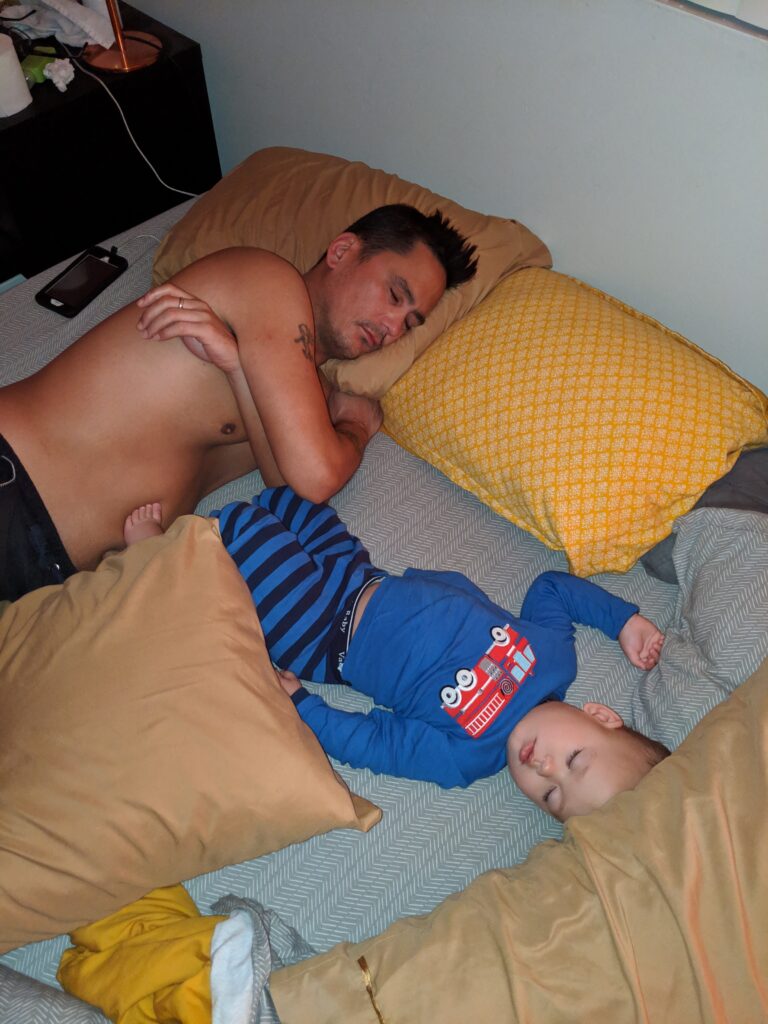
But… even with all these options, we were also dealing with our youngest son co-sleeping with us. the first 6 years of his life. So really, it’s only been the last 2 years that we’ve not had a tiny human between us – and that’s when I turned 50!
After 30 years together, we’ve accepted that we are never going to agree on our sleep environment. The goal isn’t to compromise, though. The goal is to figure out what each person actually needs and get as close as you can without making the other person miserable.
Why Do I Keep Waking Up at 3 AM
According to Harvard Health, the 3 AM wake-up hits women over 55 harder than almost any other group. Cortisol, your body’s stress hormone, is supposed to rise gently before morning. After menopause, it can spike too early, pulling you out of deep sleep hours before your alarm.
Bladder changes are part of it, too. Getting up once a night is considered normal. Twice or more starts fragmenting your sleep in ways that add up fast.
For me, it’s a mix. Sometimes I wake up and it’s just my body needing to pee. Sometimes it’s Shawn moving around or getting up. Sometimes it’s nothing at all. My brain just decides it’s awake and that’s that.
When I can fall back asleep, I do. When I can’t, I close my eyes and wait it out.
Shawn’s version is different. His internal clock has always had a 3 to 4 AM wake-up. It’s not new for him. It was wonderful when our kids were babies. He’d do the middle of the night shift, and I’d get a little sleep. But now? He wakes up and falls back asleep multiple times throughout the night. Add in the fact that he’s a night pee-er and drinks coffee well into the late afternoon, and his sleep is choppy by design.
I used to tell him his all-day coffee habit is a major part of his problem, but I stopped about 20 years ago. He swears it doesn’t keep him up. He’s a grown man; he can ignore science if he wants to.
What Menopause Did to My Sleep and What Testosterone Is Doing to Shawn’s
My worst sleep happened during the years leading into and through menopause. But it wasn’t just the hormones.
We were dealing with a bankruptcy. A family crisis with one of our kids. Financial stress that never let up. Life was rough, and we were walking zombies for a long stretch.
The research refers to women in their late 40s and early 50s as the “sandwich generation.” Careers, aging parents, kids, finances, all of it pressing in at once. My version of that was different because we were also traveling full-time, living out of suitcases, and trying to hold a family together across 39 countries. The stress didn’t come from a corporate job. It came from everything else.
My mind would race about money. About the kids. About what was next. Planning our next location. Running our businesses. Homeschooling our littlest and being there for our adult kids. And then menopause layered declining estrogen and progesterone on top of all of it, which disrupted my melatonin production, messed with my temperature regulation, and made the sleep I was getting lighter and less restorative.
For Shawn at 56, it’s the testosterone decline. The University of Montreal research found that low testosterone intensifies the loss of deep sleep in men over 50 because the brain can’t synchronize the way it needs to for that deep, restorative phase. He’s putting in work during the day, exercising, walking, doing pushups, but the hormonal shift is quietly undermining the quality of sleep he’s getting at night.
Same bed. Same house. Completely different biology. Completely different sleep problems.
Everything We Tried and What Actually Works
Melatonin. We tried it years ago. It did nothing for either of us.
Magnesium. We tried every version to see which one worked best. For Shawn, it really just helped him poop. He does take it for about 2 weeks when he gets leg cramps, and it helps dramatically. Then he stops taking it because he feels fine. Then the cramps come back. Repeat. I took it daily for years and honestly felt like it didn’t help me long term.
According to the Sleep Foundation, nearly 50 percent of US adults don’t get enough magnesium, and studies do show it can help older adults fall asleep faster. But for us, the sleep benefits didn’t pan out the way the research suggested.
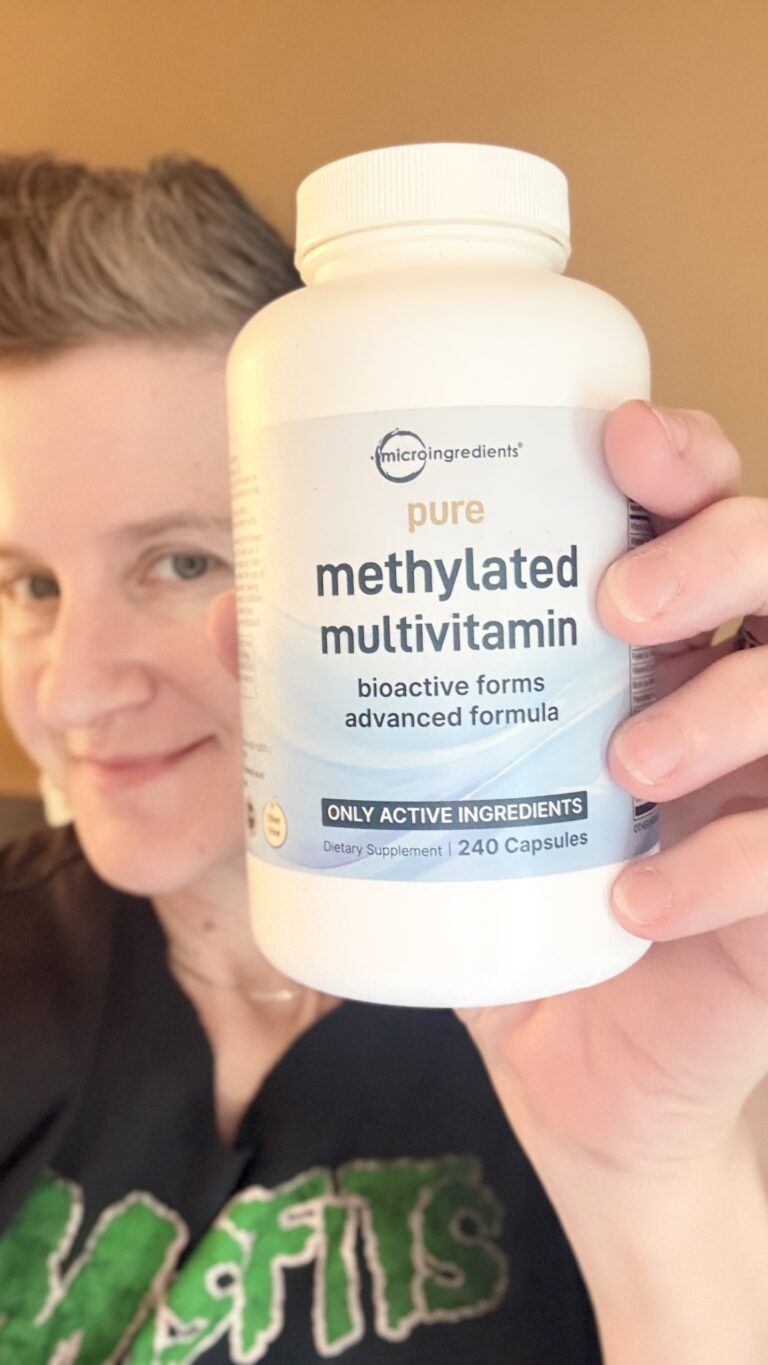
Instead, I started doing Epsom salt foot soaks one to two times a week. I get some magnesium through my multivitamin. And we both started adding more himalayan and celtic sea salt into our diets. I sprinkle salt in my water bottle. I also stopped drinking as much water in the evenings, which means I’m not up peeing all night.
I tried the RYZE sleep cocoa. It didn’t help me sleep, but what I realized was that the routine of making it was what helped. The act of winding down, doing something that signaled the end of the day, mattered more than whatever was in the cup.
Neither of us takes prescription medications. No HRT. No sleep aids unless we’re really struggling. Shawn will take one Tylenol PM very occasionally if he can tell he’s not tired but needs to sleep. If I’ve had several days of really poor sleep, I’ll take a benadryl.
Another thing that made a real difference for me was something most people wouldn’t associate with sleep. I was diagnosed with central sleep apnea about 25 years ago. I hold my breath when I’m anxious. When my body releases after holding, it sounds like a balloon slowly releasing air. Shawn will tell me I was making my noises during periods of anxiety. It wasn’t a constant, so we realized the anxiety caused it.
Instead of getting on beta blockers or other medications, I found that Force Factor Ultimate Heart Health beet chews work for me. I actually started taking them for another reason, but the side effect that made the difference for me was helping with circulation & blood flow. Within 20 minutes of taking two chews (day or night), I relax, and my breathing returns to normal. Since I started keeping them on hand, I don’t have the week or two-week-long anxiety periods I used to have. The moment I notice I’ve been holding my breath, I pop two chews.
Back to Shawn. He has a light snore. Not every night. He refuses to take a sleep test. Typical man. We aren’t worried about it right now.
The Routine That Finally Made the Difference
Shawn falls asleep watching programs he’s seen a hundred times. Downton Abbey. 24. Something he doesn’t need to pay attention to. He’s out in five minutes, and then I’ll put his phone away.
For me, I end my day similarly. Catching up on my favorite reality shows like Housewives or Summer House and scrolling or playing Angry Birds while laying on my side. I used to fall asleep with my shows on and wake up with the phone still playing. Now I can tell when I’m ready to sleep. Click off my shows, roll over, and within five minutes I’m out.
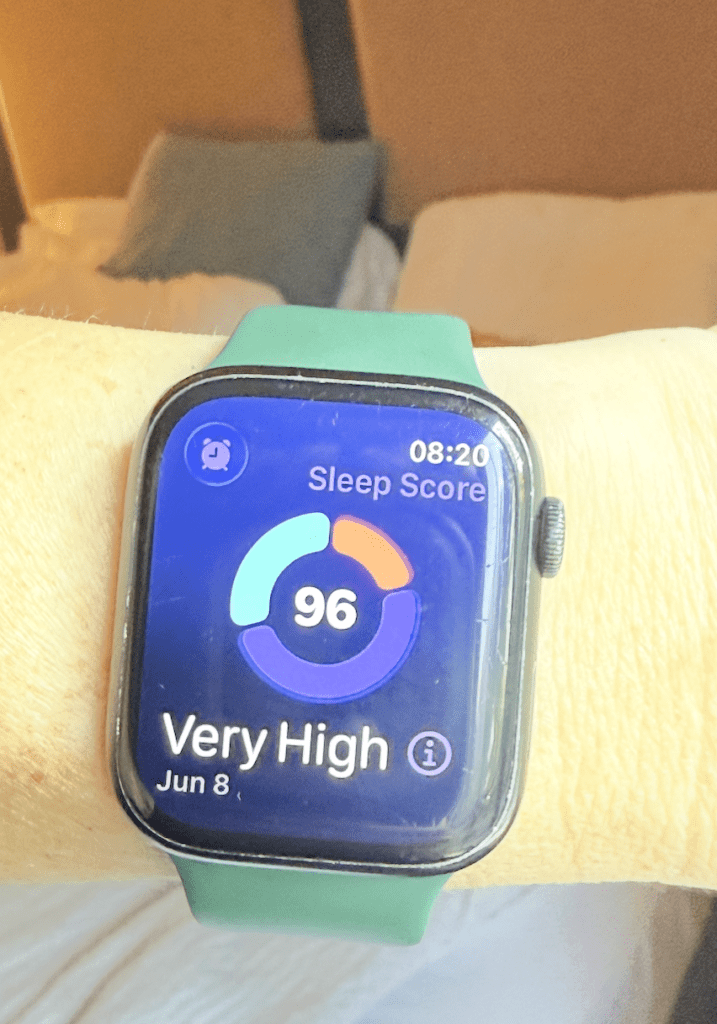
The other change that helped was forcing myself to stop sleeping on my stomach. While traveling, we slept on all sorts of beds. Hard beds were fine for stomach sleeping, but soft beds made me wake up sore. It took months to retrain myself. I toss and turn a bit more now, but my sleep scores on my Apple Watch are actually better, including my HRV.
Speaking of the Apple Watch, I’ve worn one for five years, tracking my sleep, HRV, and blood oxygen levels. At one point, I stopped wearing it for six months because I was tired of charging it and wanted to see if I slept better not obsessing over the numbers. It made no difference. I went back to wearing it for other features, like reminders to stand up and wash my hands longer. Silly stuff, but useful.
The real shift in my sleep didn’t come from a product or a supplement. It came from settling into my sleep preparation patterns, being in a less chaotic state of life. Less uncertainty. Fewer crises. Menopause, layered on top of real-life stress, was what made those years so brutal. Now that we’ve stopped traveling and settled down, building something stable, I’m sleeping deeper and better than I have in years.
This might not work for you, but I’ve figured out enough of my own puzzle to get quality sleep at night.
Why Busy Days Mean Better Nights
Also, we both sleep best after busy days.
That doesn’t always mean physical activity, though that helps the most. It could mean sitting at the table, really working all day. Going to the park with our 8-year-old. Running errands. Grocery shopping. Getting sun.
When we’ve had a totally idle day and done nothing, we don’t sleep well at all.
When we were traveling full-time and walking five to ten miles a day, we slept hard. Not because we had a great bedtime routine. Because our bodies were genuinely tired. The exercise gave us energy during the day and wore us out at night. Unless we overdid it on uneven ground or too many flights of stairs and ended up with sore feet or a sciatica or plantar fasciitis flare-up, and then the soreness kept us awake. Isn’t aging fun?
Since coming back to the States, our daily movement has dropped dramatically. We wrote about that shift in another post about weight gain. Less walking means less physical tiredness. Less physical tiredness means lighter sleep. It’s the same cycle showing up in a different part of our health.
Three of our Simple Six pillars, sleep, energy, and weight loss, are all connected. When one shifts, the others follow.
What Our Sleep Looks Like Now
It’s better than it was during the rough years. It’s not perfect.
Shawn still wakes up multiple times a night. He still drinks coffee too late in the day. He still won’t take a sleep test. He still wants the room warmer than I do.
I still wake up sometimes with my brain running. I still have nights where I just close my eyes and wait it out. I still need the room darker and colder than he does.
We don’t use sound machines. We’ve slept in super quiet rooms and noisy apartments on busy streets in Bangkok. Once we get used to the environment, we can adapt. That part, at least, hasn’t changed.
Sleep after 50 isn’t something you solve once. It’s something you keep adjusting. Different supplements, different routines, different beds, different stress levels, different phases of life. What worked three years ago doesn’t work now. What works now might not work next year.
The only thing that stayed consistent is that busy days, low stress, a cool room, and a wind-down routine that tells my brain the day is over are the combination that gives me my best nights.
If your sleep changed after 50 and you can’t figure out why, start with the basics. How much are you actually moving during the day? What time are you drinking your last coffee? Is your room the temperature your body actually wants, not the temperature your partner wants? And are you giving your brain a signal that the day is done, or are you just hoping it figures it out on its own?
I’ve been thinking about upgrading to these new smart rings that can track all your watch can but even more accurately, and can even detect sleep apnea. Technology is amazing. There are so many sleep trackers, some you just put on your nightstand too. They don’t have to be expensive to work well.
What changed about your sleep after 50 that nobody warned you about? We want to know.
Disclosure: GutBeautyBody content is written from personal experience and research. We are not medical professionals. All factual health claims are sourced from peer-reviewed research and reputable health organizations. Read our full Medical Disclosure here.
Disclosure: This post contains affiliate links. If you purchase through our links we may earn a small commission at no extra cost to you. We only recommend products Wendy personally uses and believes in. Read our full Affiliate Disclosure here.