The first sign that I’m not getting enough protein is always the same.
I get lightheaded when I stand up too quickly.
Not dizzy or faint exactly. Just off. A little foggy, a little weak, like my body is running on fumes. And every single time, when I stop and look at what I’ve been eating, I can trace it right back to protein. Too little of it, for too many days in a row.
I’ve learned this the hard way more than once.
Protein after 50 matters more than it did at 30 because your body becomes less efficient at turning the protein you eat into muscle, a shift researchers call anabolic resistance. You need more protein now to get the same result you used to get with less. Most people are getting far less than they need, and they feel it without knowing why.
Disclosure: This post contains affiliate links. If you purchase through our links we may earn a small commission at no extra cost to you. We only recommend products Wendy personally uses and believes in. Read our full Affiliate Disclosure here.
How Much Protein Do You Really Need After 50
The old recommendation of around 46 to 56 grams a day was set to prevent deficiency, not to keep you strong. According to Mayo Clinic Press, the better target after 50 is 1.0 to 1.2 grams of protein per kilogram of body weight. Take your weight in pounds, divide by 2.2 to get kilograms, then multiply by 1.0 to 1.2. Stanford Lifestyle Medicine pushes that range even higher for active adults over 50, up to 1.6 grams per kilogram.
Run the math for yourself. A 150-pound woman lands around 68 to 81 grams a day at the standard range, more if she’s active. A 180-pound man lands around 82 to 98 grams, and closer to 130 grams if he’s training hard and trying to hold onto muscle.
That’s a big jump from what most of us grew up thinking we needed. It applies to both of us, Shawn and me, just at different numbers.
I aim for at least 80 to 100 grams a day. Shawn doesn’t track his. He goes by feel, and after 30 years I can tell you his feel is pretty accurate when he’s paying attention to it.
The Day I Felt Lightheaded and Realized Why
There was a stretch where I wasn’t paying attention to my macros at all. Life was life-ing, I was stressed and counting calories, and my macros were the last thing on my mind.
When I do that, everything slides. I eat worse. I reach for carbs and junk. I stop getting enough protein without even noticing. This went on for about six months.
Then one day, I felt lightheaded. I stood up and sat back down immediately.
I’ve been here enough times to know what it means. It’s my body’s check engine light. The moment it happens, I already know what the problem is before I even think it through. I haven’t been eating enough protein.
I’d been feeling bits of this feeling for months, but until that moment when my body slapped me hard so I’d pay attention, I hadn’t been.I’d been feeling bits of this feeling for months, but until that moment where my body slapped me hard so I’d pay attention, I hadn’t been.
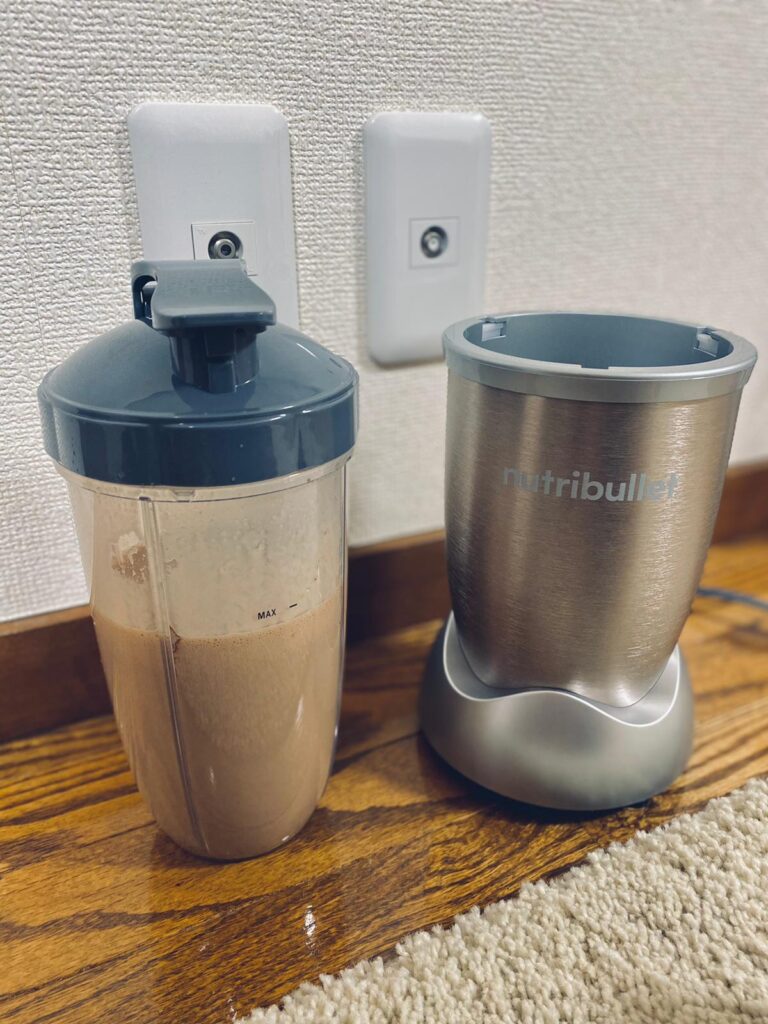
More protein is what fixes it. Every time. It’s a pattern I’ve watched play out in my own body for years. After I sat there for a bit, I got up slowly and immediately made myself a protein shake.
The Keto Reset That Reminded Us Both
Around that same time, Shawn was going through a vegetarian phase.
He wasn’t getting enough protein either. Sure, he was eating legumes and eggs, but he wasn’t making sure he was getting enough at each meal, and he wasn’t drinking his protein shakes.
After his workouts, he was still tired. He wasn’t building muscle, no matter how consistent he was. We were both dragging and not really connecting the dots.
So we switched to keto. Every single time we do, our bodies feel the difference.
Within days, we both felt better. Clearer. Stronger. More like ourselves. And we remembered something we’ve relearned, and apparently need to keep relearning over the years. We both feel this way when we get more meat and protein into our diets.
That’s also when I started paying real attention to taking extra collagen with a high protein count per serving. Not the bargain stuff with 8 grams a scoop. Something that actually moved the needle on my daily total.
Why Your Muscles Stop Listening After 50
After 50, your muscles become less responsive to protein. Researchers call this anabolic resistance. Your muscles need a stronger protein signal at each meal to do the same repair and building work they did in your 30s. Same body, higher requirement.
On top of that, you’re losing muscle whether you do anything about it or not. According to research on aging muscle, women can lose up to 8 percent of their muscle mass per decade after 40, and that rate speeds up after menopause. Men lose muscle too, generally 3 to 8 percent per decade, with the decline picking up speed as testosterone drops. The condition is called sarcopenia, and it’s the quiet reason so many people get weaker and frailer as they age, regardless of whether you’re a man or a woman.
Protein is one of the most effective ways to slow it down, especially when paired with resistance exercise. AARP cites a study in which adults over 50 who roughly doubled the old RDA were better able to rebuild and retain muscle in just four days compared to those eating the standard amount.
This is exactly what Shawn is up against. He’s doing the pushups, the walks, the resistance work, and the biology is still working against him because of his age and his testosterone decline. Protein isn’t optional for him. It’s the thing that makes the rest of the effort count; the problem is making sure he’s paying attention.
What We Actually Eat in a Day
Shawn does best when he starts with a high-protein breakfast. Usually eggs. Sometimes he’ll add sausage or bacon or ham, maybe some cottage cheese.
When he eats carbs in the morning, he crashes early. Every time. So he’s learned to skip the carb-heavy breakfast and lead with protein.
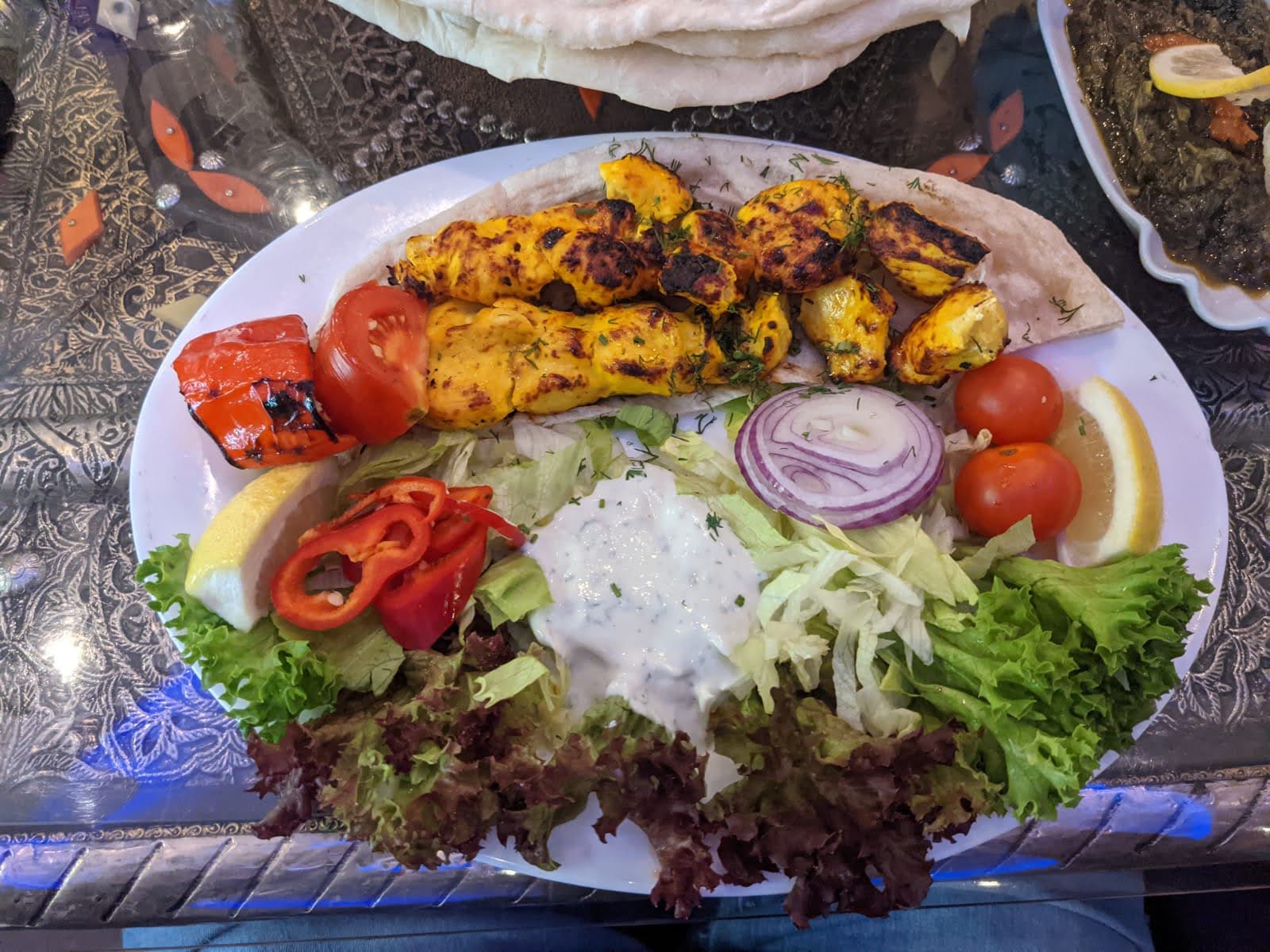
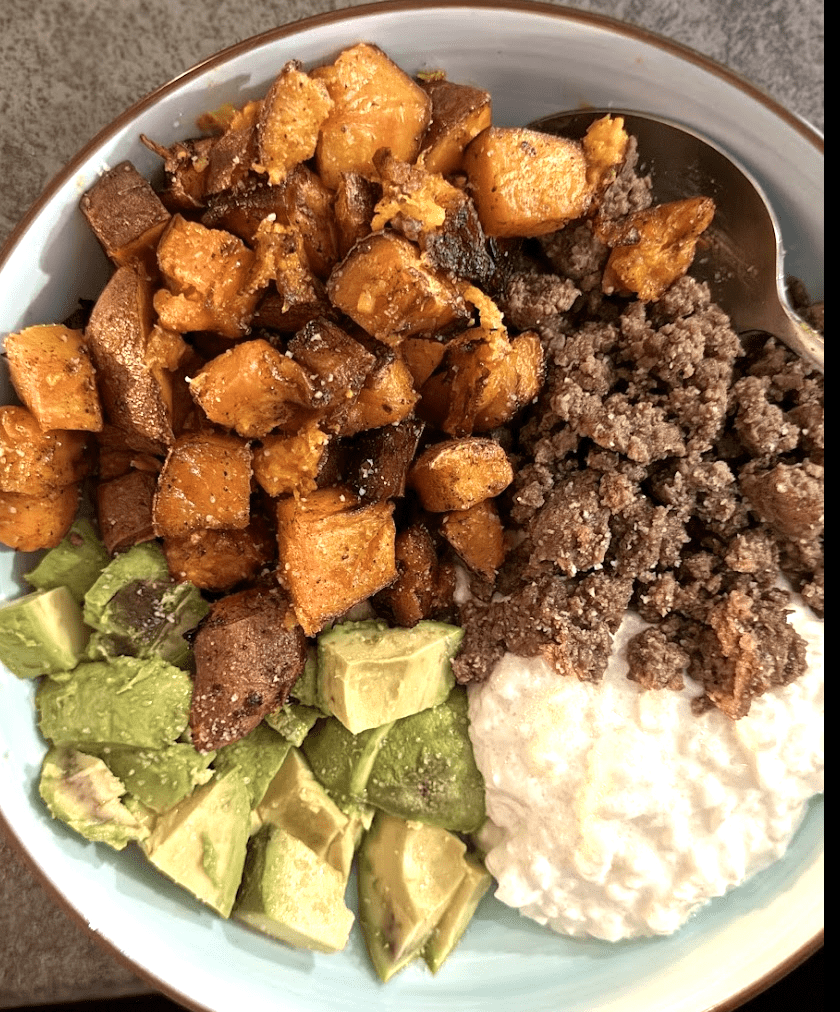
For lunch he likes something with veggies, some fruit, and usually chicken or legumes for protein. For dinner he wants rice or sweet potatoes with ground beef, chicken, or some other whole-food protein. Nothing fancy. Just real food, every day.
I’m different.
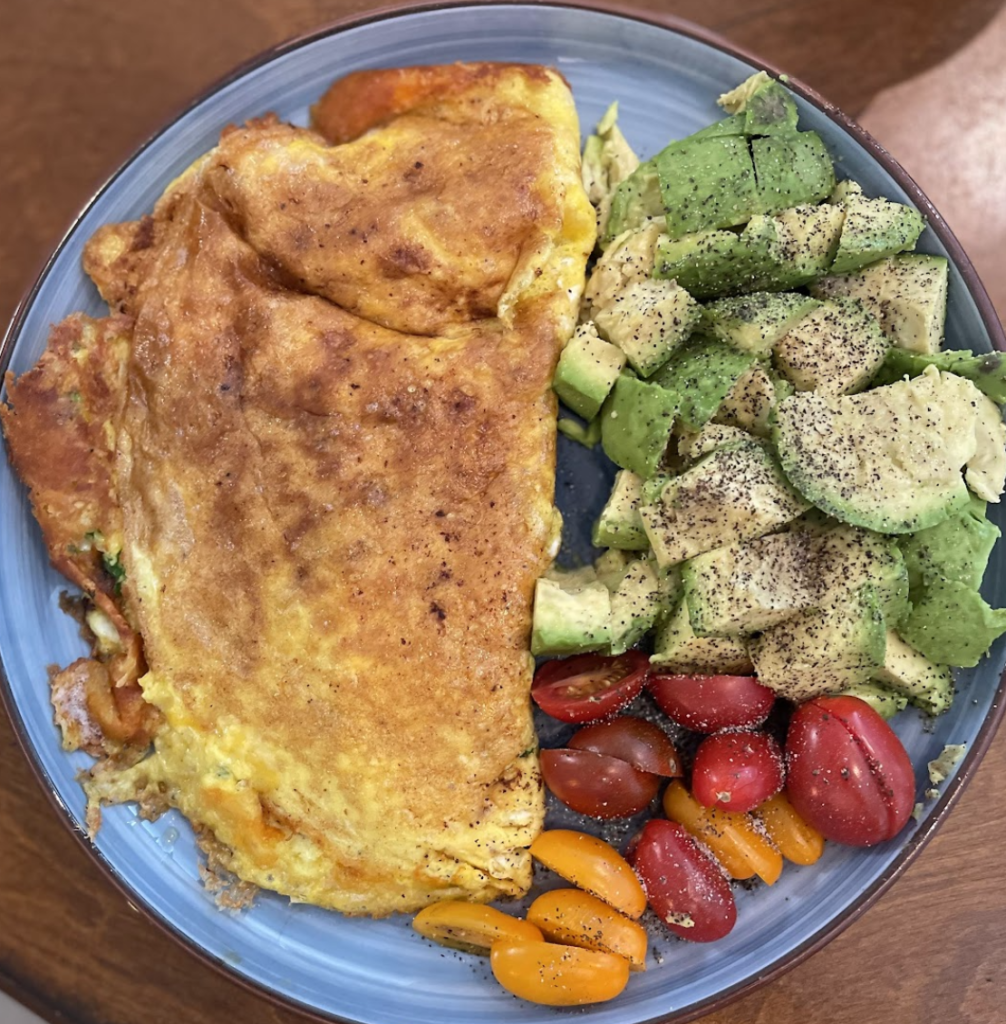
I don’t usually eat anything beyond my collagen coffee until around noon. When I do eat breakfast, I love a good omelet or scrambled eggs with a side of fresh avocado and cottage cheese.
Lunch is where it gets hard for me. I love bread. A sandwich on homemade bread or a French baguette with roast beef is my happy place. I can make a beautiful salad of any kind, but when left to my own preferences, I reach for the bread. That’s the meal where I have to be the most intentional about getting protein in instead of just carbs.
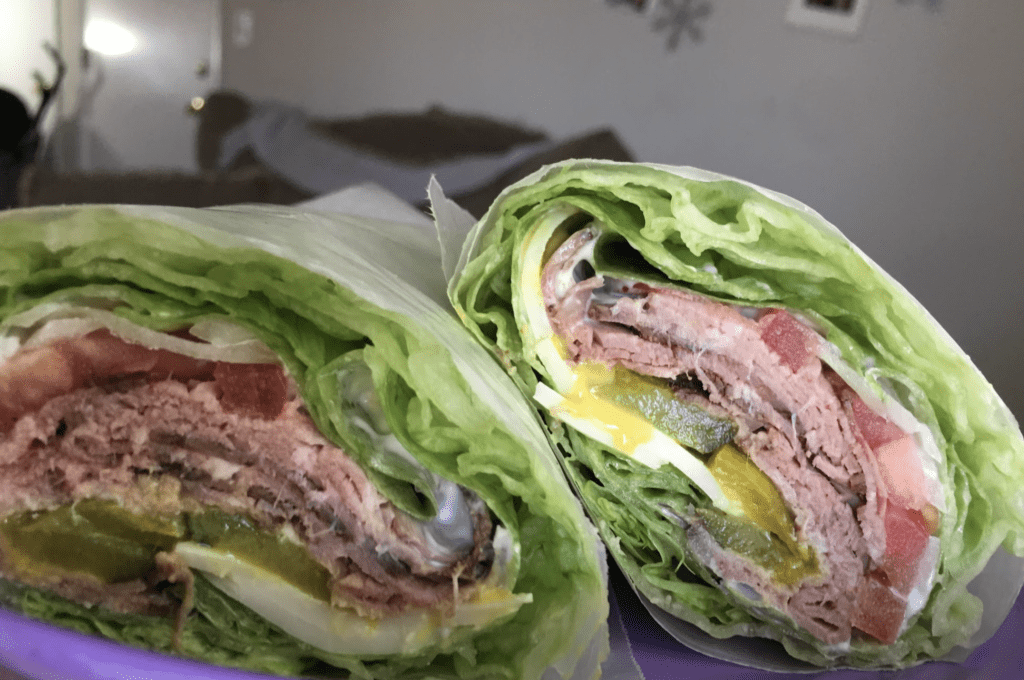
Sometimes I’ll make a charcuterie plate, or a lettuce wrap if I want the sandwich style but no bread.
Dinner, I’m all over the place. Homemade pizzas, casseroles, Indian, Mediterranean, Mexican, whatever I’m in the mood to cook. As long as I’m hitting my 80 to 100 grams across the day, I don’t stress about being rigid. I’d rather focus on whole foods and protein intake over calorie counting.
The Absorption Problem Nobody Talks About
I have a wrinkle most people don’t.
I had gastric bypass surgery in 2006, which means my body doesn’t absorb nutrients the way it used to. Protein included. So I actually have to eat more protein than the standard formula says just to end up with enough that my body can use.
The same absorption issue makes me anemic if I’m not careful. I have to stay on top of iron and ferritin, because my body doesn’t pull what it needs from food alone.
And here’s the balancing act. I need more protein, but I also have to stay within my calories so I don’t overeat and gain weight. Everything gets harder to juggle as we age. More protein, enough iron, enough of everything, all while not eating so much that the scale climbs. That’s exactly why I look for collagen and protein sources with a high protein content per serving. I need the most protein I can get for the fewest calories.
If you’ve had any kind of surgery that affects absorption, or you’re managing anemia, or you’re trying to lose weight while getting stronger, you already know that nothing about nutrition and protein intake is one-size-fits-all.
The Protein Powder We Actually Use
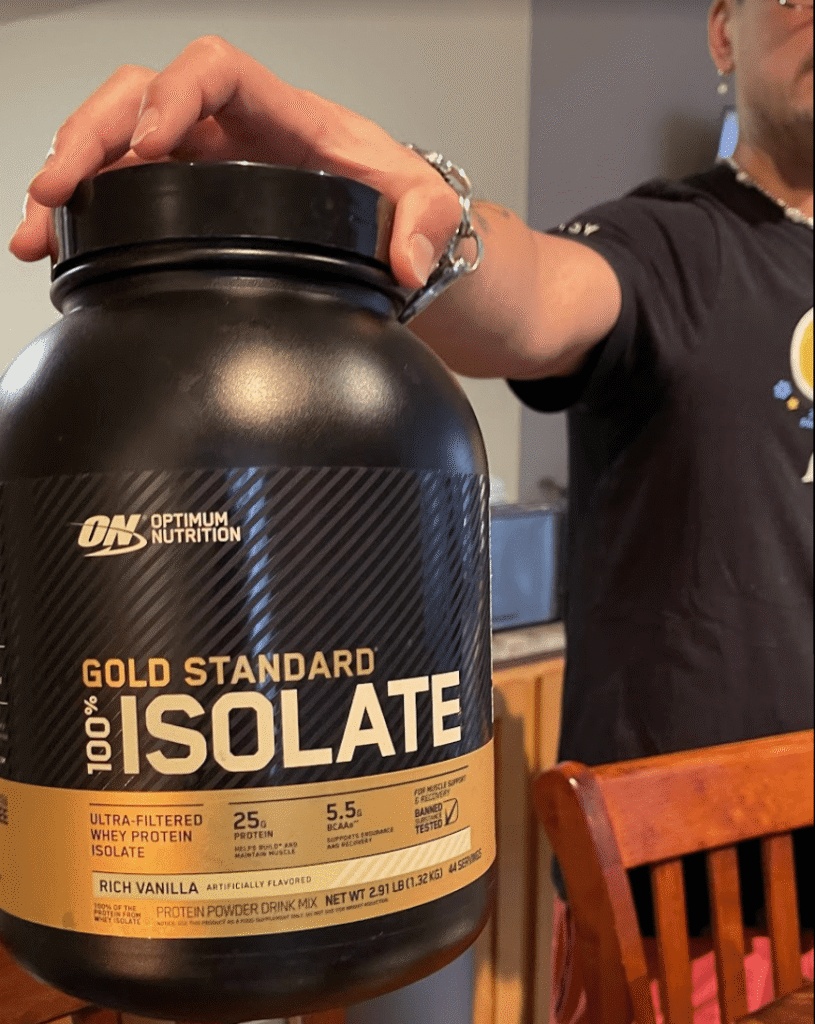
Beyond the collagen, we use Optimum Nutrition Gold Standard 100% Whey Isolate.
It’s the best tasting protein powder I’ve ever used, and I’ve tried a lot of them. I prefer the Chocolate Bliss and Shawn loves the Rich Vanilla. It has 25 grams of protein per serving. Add water, shake it up, and it’s actually a treat instead of a chore. No chalky aftertaste, no choking it down.
On days I know I’m running low on protein, a shake closes the gap quickly without adding a pile of calories I don’t want to track.
Shawn will also mix in peanut powder to get extra protein and get the flavor combo he’s looking for. His favorite candy is Reese’s peanut butter cups, so it also satisfies his sweet tooth
When Money Is Tight, Protein Is the First Thing to Suffer
I want to be honest about something that I think most people are dealing with.
When we were struggling financially, we ate less meat. It’s expensive, and it’s usually the first thing to get cut when the budget is tight. And when you do get it, you grab the cheapest option, not the organic, free range, grass-fed, more expensive, and healthier options.
And we felt the difference physically. Especially me.
It wasn’t just that we were getting less protein. We were getting lesser quality protein too. Fatty farmed salmon instead of lean wild-caught. A twenty-dollar bag of Costco frozen chicken tenders instead of fresh organic free-range chicken from the local farm. Less protein and worse protein at the same time.
And it doesn’t stop there. When you’re stressed about money, your cortisol rises. You sleep worse. You eat worse, reaching for comfort food. Which means even less protein, more carbs, more of the cycle feeding itself.
If you’re in a tight season right now, I’m the last person to tell you to go buy grass-fed everything. Eggs are among the cheapest, highest-quality proteins. Canned fish, cottage cheese, dried beans and legumes, and a tub of protein powder that lasts a month. You can hit your protein without buying the expensive cuts. We’ve done it both ways, and getting enough protein matters more than getting the highest quality version.
What Protein Does for Us Now
When I’m getting enough, I don’t get lightheaded. That one symptom alone tells me all I need to know.
My energy is steadier. I’m not crashing in the afternoon. The weight is easier to manage because protein keeps me full and keeps my muscle from disappearing. Shawn’s workouts actually do something when he’s eating enough to back them up.
Protein isn’t a miracle. It’s not a trend. It’s the foundation that everything else in our health sits on top of. When it’s there, the rest works better. When it’s missing, everything starts to wobble, and for me, the lightheadedness shows up to remind me.
Three of our Simple Six pillars run straight through protein. Nutrition, energy, and weight. Get the protein right, and you give all three a fighting chance.
If you’re over 50 and feeling tired, weak, foggy, or like your workouts aren’t paying off, before you blame your age, count your protein for three days. Actually count it. You might be surprised how far below 80 grams you land. I almost always am when I stop paying attention.
What’s your protein like on a normal day? Have you ever tracked it? We want to know.
Disclosure: GutBeautyBody content is written from personal experience and research. We are not medical professionals. All factual health claims are sourced from peer-reviewed research and reputable health organizations. Read our full Medical Disclosure here.
Disclosure: This post contains affiliate links. If you purchase through our links we may earn a small commission at no extra cost to you. We only recommend products Wendy personally uses and believes in. Read our full Affiliate Disclosure here.