I’ve had rosacea and dermatitis for most of my adult life.
Dermatologists tried. Prescriptions came and went. Some helped a little. Some made things worse. One doctor recommended CeraVe, and it dried me out instead of hydrating my skin. I could list all the prescription and over-the-counter products I’ve tried over the past four decades and weep at the amount of money I’ve spent doing what the experts told me to do – and none of it fixed my skin.
I’m 52 now. My skin is the clearest it’s ever been. No dry patches. No active flare-ups. My rosacea still exists; it will never disappear, but it doesn’t get triggered the way it used to, and I haven’t touched a green-tinted moisturizer in two years.
What changed wasn’t a prescription. I became a content creator in July 2024 and started receiving K-beauty products to try through TikTok. The first set that landed cleared my dermatitis in about a month. After decades of looking for a solution, over-the-counter skincare from Korea fixed what dermatologists in the USA couldn’t.
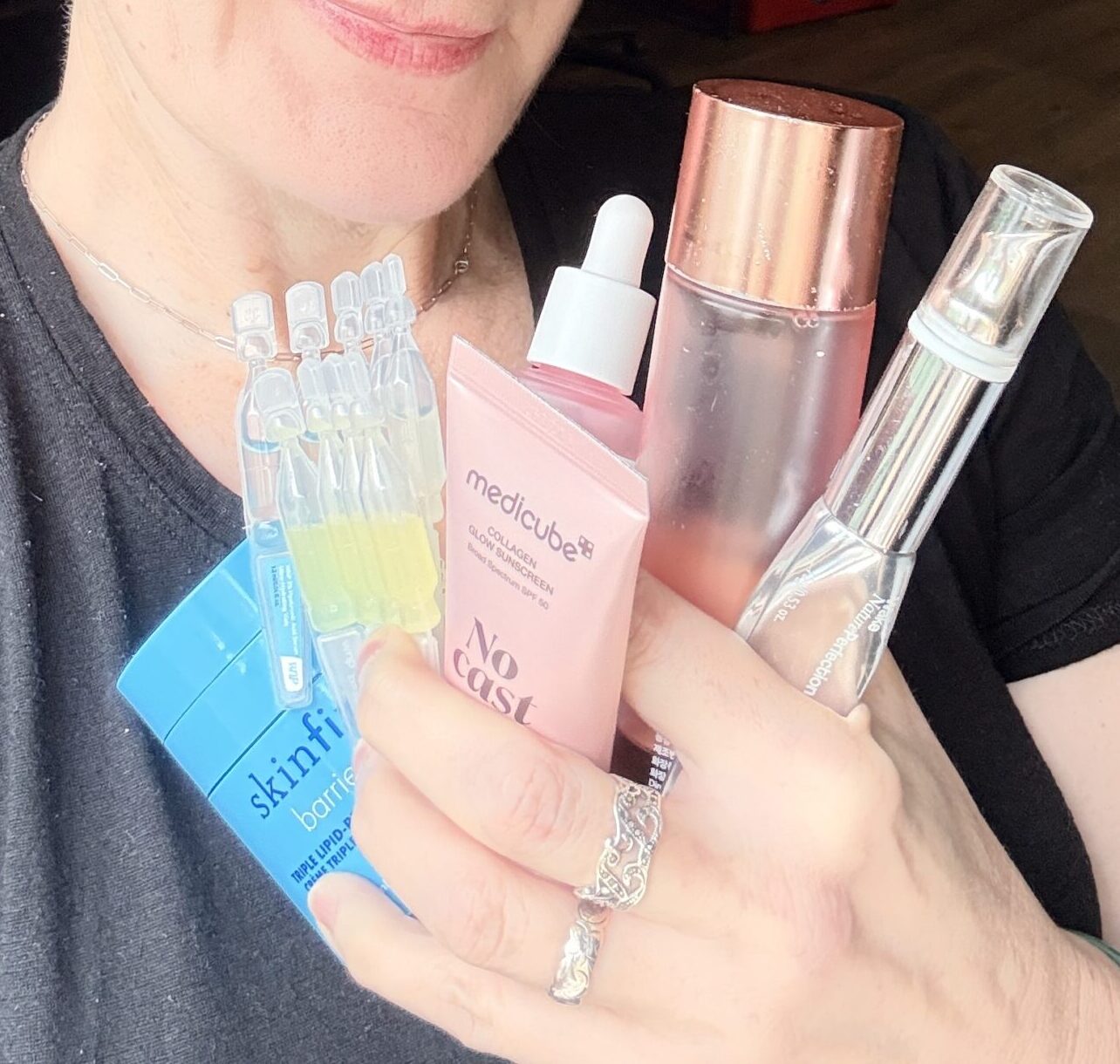
This is my morning skincare routine, in the order I use it every single day, with my honest take on each product. I’m sharing my full morning skincare routine, below, with details. But here’s the shopping list if you want to follow along.
Disclosure: This post contains affiliate links. If you purchase through our links we may earn a small commission at no extra cost to you. We only recommend products Wendy personally uses and believes in. Read our full Affiliate Disclosure here.
Why My Skin Never Responded to What Dermatologists Recommended
Most standard recommendations for rosacea and sensitive skin tell you to strip your routine down to almost nothing. Gentle cleanser, fragrance-free moisturizer, mineral SPF. That idea isn’t wrong for everyone, but it was the wrong approach for my skin.
After 50, skin loses moisture faster. Women get dry in more places than just our faces. IYKYK. Skin produces less of its own oil and needs more active support to stay hydrated and calm. A basic three-step routine was never going to fix what I was dealing with.
K-beauty takes a different approach. Layering lightweight products in the right order gives skin more of what it needs without overwhelming it. Each layer absorbs before the next one goes on. Nothing sits on top of anything else. The result is hydration that actually holds, rather than the tight, reactive feeling I lived with for most of my life.
Further, I’ve learned that if you want or need extra hydration in super dry or cold months, you can do something called “Flooding your skin”. It’s basically putting multiple layers of your products or similar products on your skin. My favorite way to flood my skin is to use multiple toners, and my skin looks and feels amazing, super plump, and hydrated.
The American Academy of Dermatology recommends gentle, fragrance-free products for rosacea-prone skin, and most of what I use falls into that category. What differs is the number of steps and the layering approach. The clinical guidance is sound. I am just doing more of it, and in the right order.
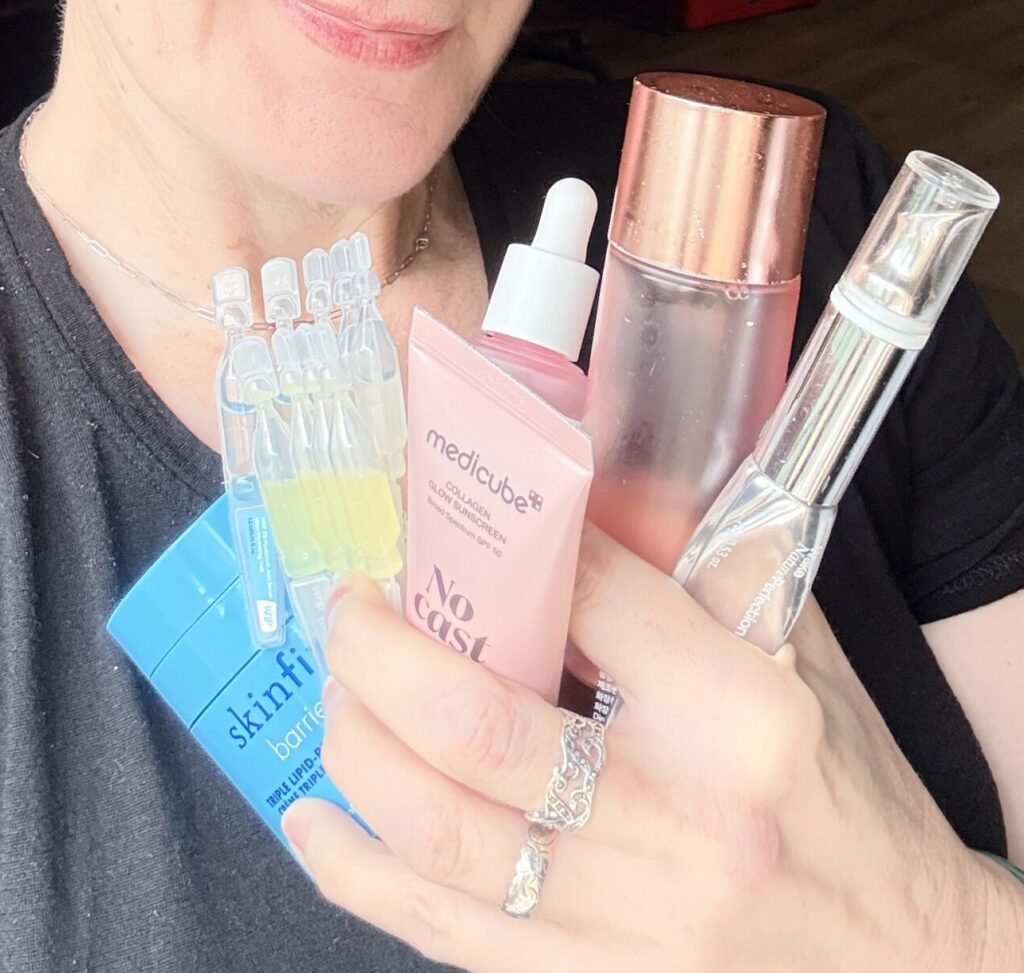
Everything below is in the order I apply it. If you change the order, some of these products will not work the way they should. The layering sequence matters.
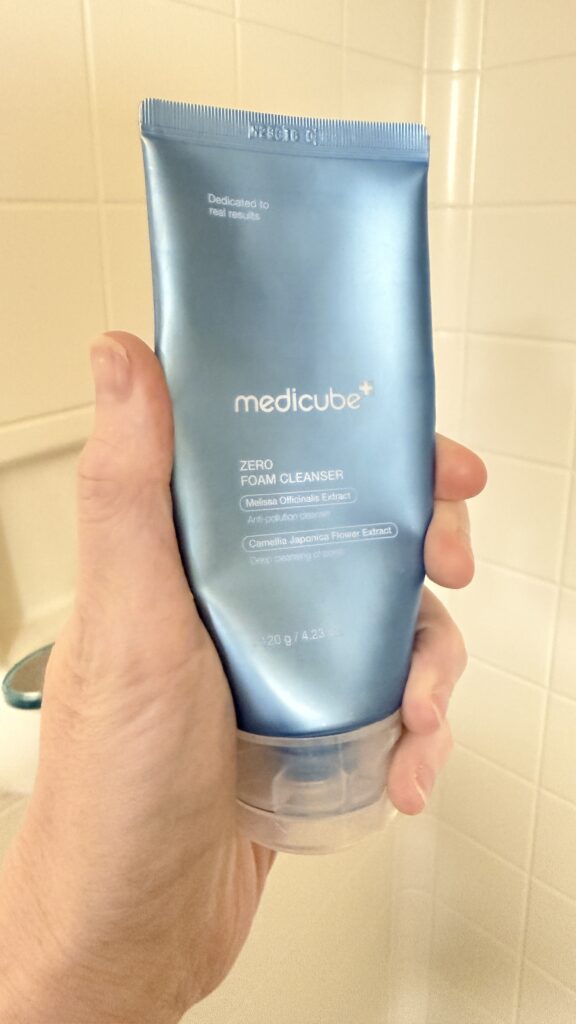
Medicube Zero Foam Cleanser is the first thing I reach for every morning and night. Lightly lemon scented, non-drying, and gentle enough to use daily without stripping your skin barrier. I have tried enough face washes to fill a cabinet, and this is the only one I have stayed with consistently. Every single person I’ve referred this cleanser to also swears by it.
After washing, I dry with a single-use facial towel instead of a reusable washcloth. A damp washcloth sitting on your bathroom counter grows bacteria between uses, and for reactive or rosacea-prone skin, that matters more than most people realize is a big no-no that I wish I had known decades ago. My skin has noticeably fewer irritations after making this switch.
Next is the 3% hyaluronic acid serum, which I apply while my face is still damp. Hyaluronic acid pulls moisture toward itself, and needs water on the skin’s surface to do so effectively. Applied to a dry face, it can draw moisture from deeper layers rather than lock it in. Dampen your skin every time, without exception. Research on how skincare products penetrate skin supports this, and my own experience over two years confirms it.
The Medicube Triple Collagen Toner goes on next. This is the one toner I apply every single day without fail. It’s another layer of hydration with added collagen. Toners nowadays aren’t like those alcohol stinging toners of the past. Nope! I apply it with my fingertips rather than a cotton pad. Pads absorb a significant amount of the product before it ever reaches your face. Your hands do not. Sometimes I use multiple toners or a double coat of this one if my skin is really dry.
Two to three times per week, I use the Medicube Exosome Shot Zero Serum. It’s prickly when it goes on, like little needles prickling you. It contains AHA, BHA, and PHA exfoliating acids and works like a very mild at-home microdermabrasion. If you’re new to acid exfoliants, start with once a week and see how your skin responds before increasing frequency. Do not use this every day.
The WNP Emergency Repair Firming Peptide serum follows. On days I use the exosome serum, this goes on right after. On days I do not, it follows the toner. Its job is to lock in the moisture from everything underneath it before the heavier products go on.
Then comes the product I wouldn’t trade for anything in my routine (except maybe my cleanser). The Medicube PDRN Pink Peptide Serum. Two to three drops only and it’s what gives skin that glass-skin look, and delivers real anti-aging benefits through peptides and niacinamide. My skin tone is more even, my texture is smoother, and those results have held consistently for two years.
The WNP Eye Cream goes on next. The skin around your eyes is thinner than anywhere else on your face, and it is the first area to show aging. This one has a built-in cooling massager that helps press the product in without dragging the skin. Tugging at your eye area every morning adds up over time, and it is worth avoiding. It also has a cooling effect, which feels amazing.
The Decoder Lip Care Set is quick. Long-lasting gloss and hydration in one. After 50, lips lose moisture faster than they used to, and thirty seconds with a good lip product makes a difference. Also, if you’re a straw drinker or smoker, you need to use lip products that are high-quality skincare.
The Skinfix Triple Lipid-Peptide Cream is my morning moisturizer. The scent isn’t my favorite (it smells like vaseline lotion), but the hydration is real. It keeps my skin comfortable all day, which isn’t something I could say about most of what came before it.
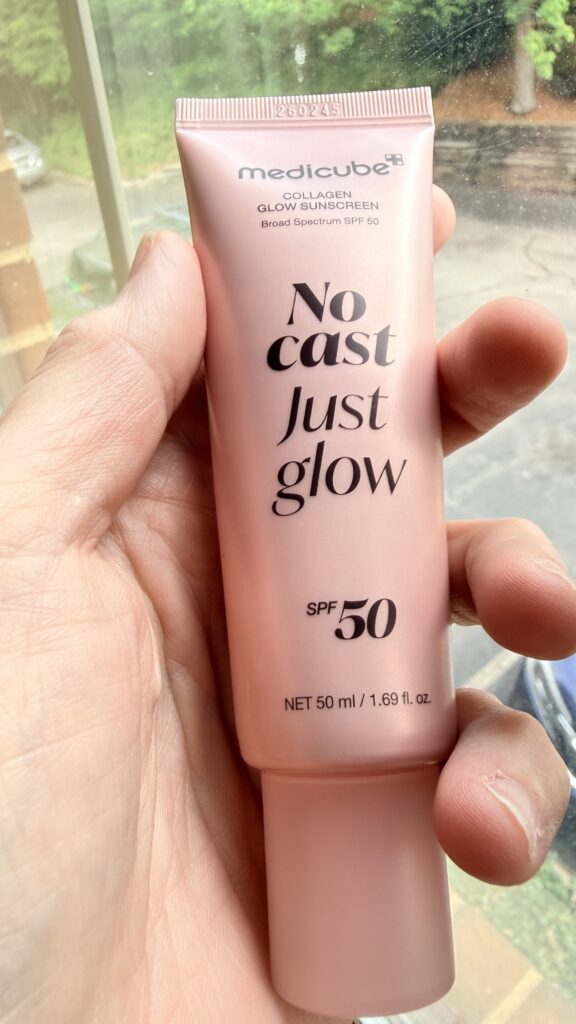
SPF is always the final step. I use two depending on the day. In winter months when I want a little color, I reach for the Beauty of Joseon Tinted Sunscreen SPF 40. They have a shade for every skin tone and it gives you a polished look without foundation. Most days, I use the Medicube No Cast Just Glow Collagen Sunscreen SPF 50. Soft, silky, no white cast, and it layers cleanly over everything underneath it. It is the best SPF I have found for a multi-step routine.

The Products I Never Skip
If I had to cut this routine down, I would keep four things: the zero foam cleanser, my collagen toner, PDRN pink peptide serum, and SPF. Those three are doing the heaviest lifting.
The hyaluronic acid on damp skin is the piece most people miss. It is a small detail that changes how your skin feels for the rest of the day, and it is backed by how humectants actually work.
The PDRN serum surprised me more than anything else in this routine. I remember seeing Kim Kardashian talk about it on one of their episodes, and she referred to it as salmon sperm, so I had to look it up. PDRN, or polydeoxyribonucleotide, is derived from salmon DNA and is used in clinical settings for wound healing and skin repair. In topical form, it works on evening skin tone, improving texture, and supporting cellular repair that slows significantly after 50. The results on my face over two years have been consistent and visible.
And SPF every single morning isn’t negotiable. Sun exposure is one of the most consistent triggers for rosacea and a primary driver of visible skin aging. Everything else in a routine works harder when SPF is protecting it. If you skip one step, don’t let it be this one.
If you want to understand what’s actually happening in your skin after 50 and why these changes matter, that context is in the skincare over 50 overview. And if you want to dig into collagen specifically, what it does and why it starts to matter more after 50, that is covered in the collagen over 50 post.
What Shawn Does in the Morning
A bar soap, whatever is available, and then Aveeno lotion on his face. That is it. I’ve tried buying him the Aveeno face products, and he hates them. Just the basic big container is all he wants.
Shawn is 56, and after all these years, his routine still takes only about 45 seconds. He doesn’t have rosacea or dermatitis. His face isn’t reactive or particularly dry. So Aveeno works for him, and I am not going to suggest someone with uncomplicated skin needs twelve products.
What his routine tells me is that skincare is not about doing more. It is about doing what your skin actually needs. Mine needed a lot of work to get stable. His did not. The right routine is the one that solves your real problems, not the one with the most steps.
But the rest of his body is dry, especially his legs. So, we still have work to do on him. Wish me luck.
Where to Start If you feel overwhelmed
Start with three things. A gentle cleanser, hyaluronic acid on damp skin, and SPF to finish. That foundation handles the most important morning needs: clean skin, hydration, and protection. But make sure they are all non-drying and are hydrating.
Once your skin is stable and not reacting to the basics, add one product at a time. The collagen toner first. Then one serum. Give your skin two to three weeks with each addition before layering in anything else. If something causes a reaction, you will know exactly what it was.
If you have rosacea or persistent dermatitis, the layering approach matters more than the specific products. Lightweight, fragrance-free, applied in the right order. That is what finally worked for me after decades of things that did not.
What is the correct order for morning skincare products after 50?
If you didn’t buy your products in a set, then a good rule of thumb is to apply products from the thinnest to the thickest texture. Cleanser first, then lightweight serums like hyaluronic acid on damp skin, then toner, then thicker serums, then eye cream, then moisturizer, then SPF as the final step. SPF always goes on last, so nothing disrupts or dilutes the protective layer.
Do I really need sunscreen every morning?
Yup. UV exposure is one of the top triggers for rosacea flare-ups and a primary driver of visible skin aging. Dermatologists consistently recommend SPF 30 or higher every morning, including overcast days, because UV rays penetrate cloud cover. Everything else in a morning routine works harder when SPF is in place.
Is K-beauty good for sensitive or mature skin over 50?
It can be, and in my experience it has been better than most of what I tried before. K-beauty is built around layering lightweight, hydrating products in a specific order, which suits reactive or dry skin well when the individual products are fragrance-free and formulated gently. The key is introducing products slowly, one at a time, so you know what your skin responds to.
Can I use hyaluronic acid every morning?
Yes, and it works best on damp skin. Hyaluronic acid is a humectant that draws moisture toward itself. On damp skin, it bonds with the water already on your face and locks hydration in. On completely dry skin, it can draw moisture up from deeper layers instead. Apply it right after cleansing, while your face still has some dampness on it.
What if my morning skincare routine is making my skin worse?
Strip it back to basics. Cleanser, moisturizer, SPF. Wait two weeks for your skin to settle, then reintroduce one product at a time with at least two weeks between each addition. Reactive skin often responds to fragrance, alcohol, or products being layered too quickly. Slowing down is almost always the faster path when it comes to building a routine for sensitive skin.
My morning skincare routine over 50 is twelve steps. I wouldn’t have believed that sentence ten years ago. What changed isn’t the number of products. It’s finding the right ones, in the right order, and applying them consistently that I can also do in under 2 minutes. The dermatitis I lived with for decades cleared within a month and hasn’t returned. The rosacea stays quiet. To me, that’s worth more than 2 minutes every morning.
Disclosure: GutBeautyBody content is written from personal experience and research. We are not medical professionals. All factual health claims are sourced from peer-reviewed research and reputable health organizations. Read our full Medical Disclosure here.
Disclosure: This post contains affiliate links. If you purchase through our links we may earn a small commission at no extra cost to you. We only recommend products Wendy personally uses and believes in. Read our full Affiliate Disclosure here.