Nutrition After 50 | Why the Old Rules Don’t work
The diet that kept you lean at 35 is working against you now.
Same portions. Same foods. Same habits. And somehow you’re gaining weight, losing energy, and recovering slower than you used to.
Aging and biology are working against you
Your hormones shifted. Your metabolism changed. Your body processes food differently than it did 20 years ago. And the nutrition advice most of us grew up with was never designed for this stage of life.
Shawn & I have spent 2 decades figuring out what nutrition actually looks like, in our own kitchen, in our own bodies, across 39 countries.
One thing we’ve done is tried every diet you can imagine and I’ve learned to cook and bake in them all. From Vegan and even Raw diets (no thanks) to Candida, Keto, Fasting, Whole Foods, and paid meal diets like Jenny Craig and Nutrisystem too.
We’ve figured out which diets and even what specific foods work for, and against, Shawn and me, as well as our kids.
For example, Shawn and our daughter (who share the same body structure and look most alike) prefer and feel their healthiest when they eat less animal protein and stick to more Buddha bowls with fresh veggies, grains, and bean-heavy meals. Our boys (who share more of my physical build) and I love meat, cheese, and high-protein diets. When I eat a heavy veggie diet, my gut screams at me. When Shawn eats a lot of beef, his eczema acts up, and his skin screams.
What we learned is that our bodies are all individual puzzles. Genetics plays a huge role in what nutrients affect us positively as well as negatively, and what makes me feel my best doesn’t necessarily work for my spouse or even kids.
Nutrition is one of our Simple Six, the six foundational areas we believe determine how you feel after 50.
The Protein Problem (And Why It Anchors Everything)
After 50, a process called anabolic resistance means the body requires significantly more protein just to maintain existing muscle mass. As muscle mass declines, resting metabolism slows, which is the primary driver of midlife weight gain even when eating habits haven’t changed. Research indicates that protein needs increase with age, not decrease.
Most people don’t put two and two together: protein is the biggest gap.
Without enough protein, your body loses muscle. When you lose muscle, your metabolism drops. When your metabolism drops, you gain weight, doing exactly what you’ve always done. It’s a chain reaction, and protein is where it starts.
We don’t use macro calculators. We don’t weigh food. We build every single meal around a heavy protein source first. Eggs, chicken, fish, beef, Greek yogurt, legumes. Protein is the foundation. And we choose different amounts of each individually. Everything else fills in around it.
Research indicates that older muscle tissue becomes less responsive to protein. You need more input to get the same result. That’s not something most people hear from their doctor.
The practical shift is simple. Protein first, every meal. Not as an afterthought. Not as a side. As the thing the meal is built around.
And if your gut isn’t in tip-top shape, it can’t take in and process all the good things you’re feeding it.
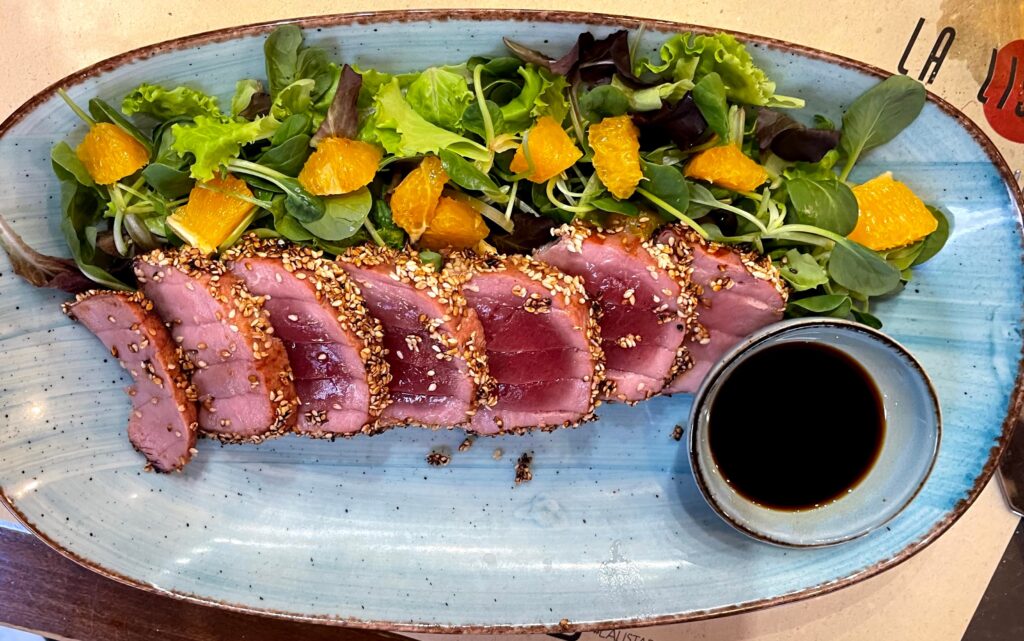
Food Quality and Food Culture around the world
We didn’t always pay attention to what we ate and drank.
We changed how we eat after a family health crisis for our daughter, which pointed straight to the quality of our food.
That was the moment we stopped trusting the food system and our doctors to keep us healthy.
And, add in traveling the world full-time for the past 10 years to 39 countries across 4 continents, and we’ve not only learned about food, but total health and wellness within other cultures.
In cultures with the lowest rates of chronic disease, people aren’t counting macros. They aren’t following protocols. They aren’t afraid of fat or obsessing over calories. They’re eating recognizable whole food, sourced locally, prepared simply, and eating it with people they love. They aren’t stressed about it.
In the States, bread has 15 ingredients. Meat is raised on antibiotics. Dairy is pumped with hormones. And we treat all of this as normal because it’s all most of us have ever known.
When we moved back after years of eating whole food abroad, the contrast was impossible to ignore. The weight came on fast. The energy dropped. The gut reacted to food it never used to react to.
That confirmed everything for us. It’s not just what you eat. It’s what’s in what you eat. And the quality of your food matters more after 50 than it ever did before.
We source non-hormonal meat and dairy when we can. We read labels. We cook from whole ingredients more often than not. Not perfectly. Consistently.
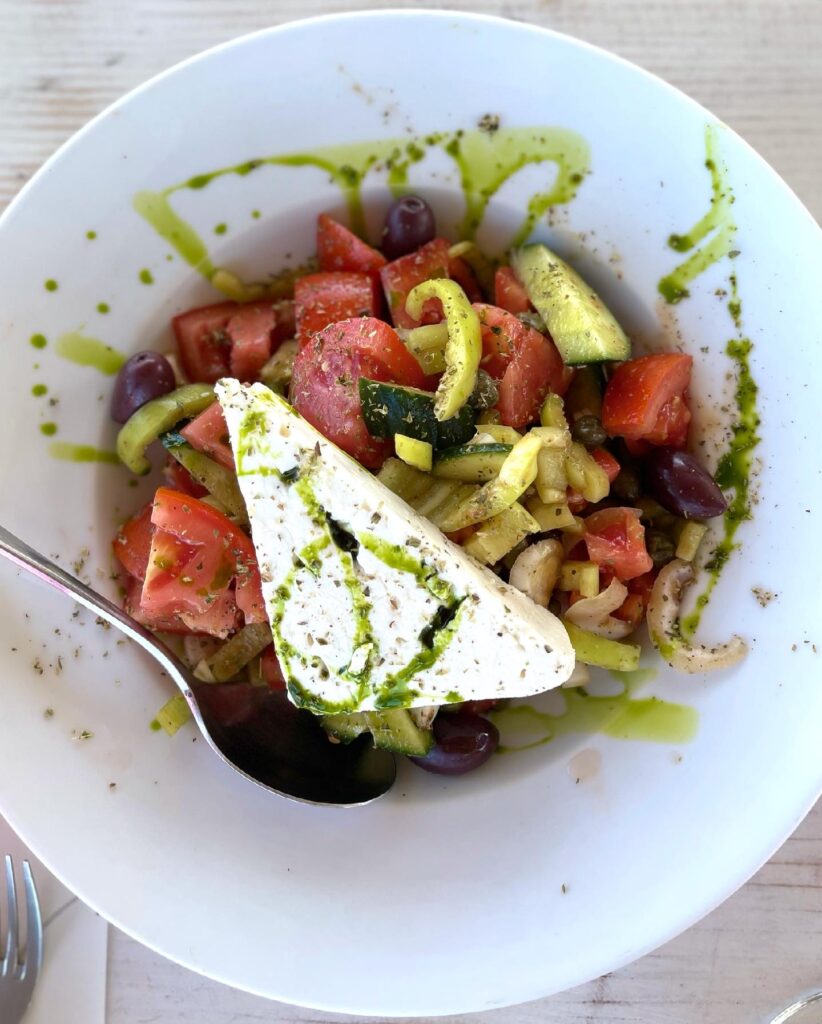
Carbs and Fats Are Not the Enemy
If you grew up in the 90s, someone taught you to fear fat. Then someone taught you to fear carbs. Then someone taught you to fear both.
None of that was right. And the damage those decades of restriction dieting did to our metabolisms, our gut health, and our relationship with food is something a lot of us are still cleaning up.
We don’t fear fat. We don’t fear carbs. We pay attention to the source.
Ultra-processed carbs spike insulin, crash your energy, and leave you hungry again in two hours. Whole food carbs from vegetables, legumes, and fruit digest slowly, feed your gut microbiome, and keep your energy stable. Same macronutrient. Completely different effect on your body.
Healthy fats support hormone production, brain function, joint health, and the absorption of fat-soluble vitamins that matter more after 50 than before. Olive oil, avocado, nuts, fatty fish, eggs, full-fat dairy from quality sources. These aren’t things to avoid. They’re things your body needs more of now.
The fat worth reducing is the industrially processed kind found in ultra-processed food and fast food. That’s a meaningful distinction from the healthy fats in whole foods.
Research indicates that insulin sensitivity often decreases with age, which means the same carbohydrate load that was fine at 35 can spike blood sugar and drive fat storage at 55. That’s not a reason to cut carbs. It’s a reason to choose better ones and pair them with protein and fat so they enter your bloodstream more slowly.
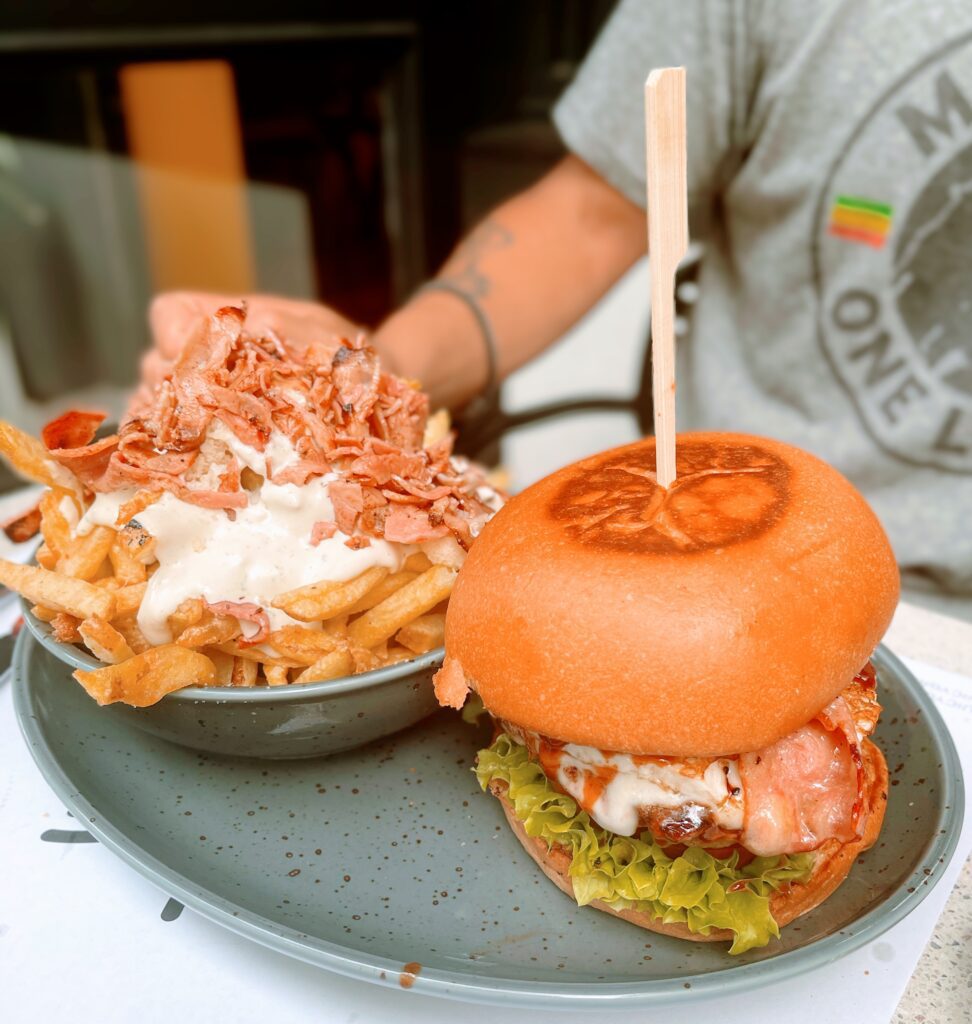
When I see someone order a low-fat dressing or get a latte with sugar-free vanilla because they are trying to make healthier choices, I always wonder whether they realize that manufacturers add chemicals to make that low-fat dressing taste better. And those 2-4 pumps of sugar-free vanilla confuse your body and brain into thinking there needs to be a glucose reaction.
The Simple Six focus points
Everything related to your health and wellness comes down to these. Make them a priority, and you will see the difference.
If Your Digestion and Immunity Are Off
Your gut runs more than you think. Digestion, energy, mood, immunity, and even skin. When it’s off, everything is off. This is the foundation for your entire body.
If You Don’t Know What to Eat Anymore
Protein matters more now than ever before. Processed food hits harder. And most nutrition advice out there isn’t written for someone managing a full life after 50.
If Your Skin Is Changing
Skincare products alone can’t resolve internal issues and might even make them worse. Factors like gut health, nutrition, sleep, and stress all impact your face before any cream has a chance to work.
If You are constantly low energy
When the clock strikes 7, and you’re ready to cancel dinner plans because you’re too tired to go out. It usually traces back to a few fixable things, and fixing them changes everything else, too.
If the Scale Won’t Budge
Midlife weight gain isn’t just about calories. Hormones, sleep, gut health, and stress all play a role. We break down what’s actually happening and what shifts make the biggest difference so you can feel and look your best.
If You’re Waking Up Exhausted
You can’t out-supplement bad sleep. You can’t out-exercise it either. And you certainly can’t keep accepting it. Poor sleep affects weight, mood, metabolism, recovery, and almost every health marker that matters.
Check Your Own Baseline
If you’re not sure where your nutrition actually stands, the Simple Six Self-Check is the fastest way to find out. It takes five minutes, covers all six pillars, and gives you a starting point.

About Shawn and Wendy Robinson
Shawn & I met in 1996, started a family, and have built a beautiful life. We’ve also built multiple startups and a Direct Sales business, and have supported ourselves with multiple streams of location-independent income, training thousands of people globally along the way.
Over the past 20 years, we’ve explored health and wellness through personal experience, experimenting with various diets, raising kids, managing health scares, food sensitivities, and weight changes, as well as traveling to 39 countries. These journeys showed us how food quality, lifestyle, and culture influence physical and mental aging. We’re practitioners, not gurus. Everything here stems from real-life experiences, personal advocacy, and taking control.
Disclosure: GutBeautyBody content is written from personal experience and research. We are not medical professionals. All factual health claims are sourced from peer-reviewed research and reputable health organizations. Read our full Medical Disclosure here.