
You wake up tired. By noon, you’re looking at your watch, wondering if it’s close to bedtime yet.
By the evening, you’re completely exhausted, and your family feels it too.
And people, including your doctors, act like this is just what happens when you get older.
It doesn’t have to be.
Midlife fatigue isn’t a life sentence. It’s a signal that something in the foundation needs attention. Usually several things at once.
We have 3 kids ages 8-28. And in our late 40s, we were chasing a toddler across the world. It was already exhausting, but something changed in our 50s.
Our energy disappeared, and the afternoon crash became the default. If we hadn’t already been so deeply entrenched in our health and wellness, we might not have noticed the changes so quickly and made changes.
We started paying closer attention to what we ate and when. How much sun and exercise were we getting daily? What foods were causing us to crash or feel drained? What time were we waking up and going to sleep? Just everything.
Energy is one of our Simple Six, the six foundational areas we believe determine how you feel after 50.
Disclosure: This post contains affiliate links. If you purchase through our links we may earn a small commission at no extra cost to you. We only recommend products Wendy personally uses and believes in. Read our full Affiliate Disclosure here.
The Real Reason You’re Exhausted
Energy declines after 50 due to a combination of decreasing mitochondrial function, hormonal shifts in estrogen and testosterone, and blood sugar instability. These changes make cellular energy production less efficient, meaning the same diet and lifestyle that sustained energy at 35 often fails to maintain it at 55.
That’s the clinical version. Here’s what it actually feels like.
You eat a normal lunch, and two hours later, you can barely keep your eyes open. You sleep what feels like enough hours and still wake up feeling like you didn’t rest. You used to power through a full day, and now the day powers through you.

It’s rarely one thing causing this. It’s the compounding effect of several things happening at once. Low protein intake, so your blood sugar is all over the place. Chronic low-grade stress, so your cortisol is burning through your reserves. A gut that isn’t absorbing nutrients efficiently, so even when you’re eating well, your body isn’t getting what it needs.
Research indicates that mitochondrial function, the actual energy production happening inside your cells, declines with age. But that decline isn’t fixed. Movement, nutrition, and sleep all directly affect how well your mitochondria work. Which means energy after 50 is something you can rebuild. Not by grinding harder. By addressing the right things.

One other thing I learned as a content creator, working with health and wellness brands, is that most supplements don’t actually help with mitochondrial function and cell repair. In fact, I found a single supplementm, one, that makes a difference by helping clean your cells and improve mitochondrial function.
When I was struggling with none of my hormone replacement meds, I tried Timeline Mitopure Urolithin A. They sent me a free sample to try, and I honestly had zero belief that I’d feel or notice a difference, but within 7 days, everything clicked. My energy improved dramatically, my hormone meds finally started kicking in after months of nothingness, and I even noticed less brain fog and stronger muscles.
The Movement Paradox
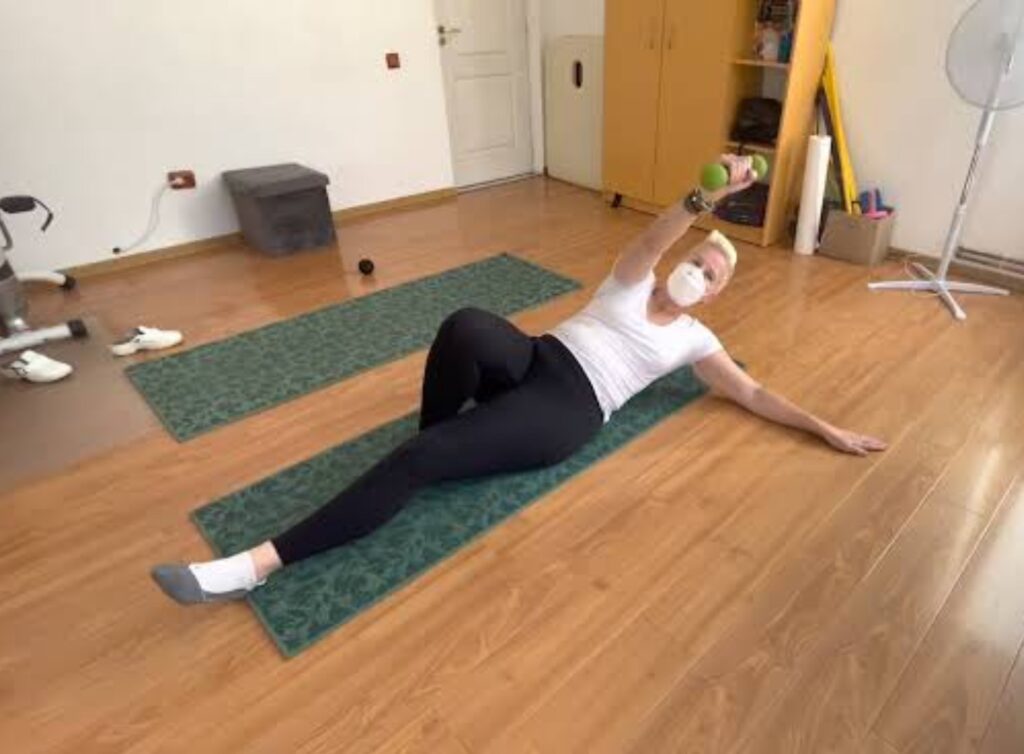
This is the part most people get backwards. When you’re exhausted, the last thing you want to do is move. But resting more actually makes fatigue worse.
Regular movement builds the mitochondria that produce energy. Sitting all day lets them decline. The less you move, the less energy your body produces. The less energy you have, the less you move. It’s a cycle, and the only way to break it is to start moving even when you don’t feel like it.
I walk daily. Some days I will just go up and down the stairs. I don’t track how long or how many steps or miles I go any longer.
Shawn goes for at least a 1-2 mile brisk walk every morning. Running and jogging are no longer something he does in his 50’s unless he’s using a machine in the gym, because one wrong step on uneven pavement and his hip feels it. He also does daily push-ups.
We now focus on walking because it’s the single highest-return activity for energy, mood, and metabolic health after 50. It’s low stress on the body, requires nothing, and compounds over time.
Shawn loves lifting weights, I don’t. Lifting builds muscle, which doesn’t just change how you look. It builds the cellular machinery that produces energy. More muscle means more mitochondria, which means more energy. Research indicates that resistance training increases mitochondrial density and improves how efficiently your body uses fuel.
The goal isn’t to be an athlete. The goal is to move consistently enough that your body stops defaulting to exhaustion.
When my heel bone spur is making me limp, I head up and down the stairs. It’s easier on my heel than walking and helps strengthen my calf and foot muscles. If I just lie in bed or sit for days, that’s when muscles can start to atrophy.
I remember my dad had to have rotator cuff surgery in his late 60’s. He’d had shoulder pain for over a decade. He had a great doctor who told him to start using it more and to do specific movements and exercises. Know what? My dad didn’t listen to him. Instead, he complained. He sat in his recliner and just watched his programs. His arm and shoulder became even more stiff, weaker, and in more pain as the years went on. The problem is that he wanted the surgery. The quick fix. Guess what he didn’t expect after he finally got his wish? After surgery, his surgeon told him he needed physical therapy to rehab his shoulder. My dad didn’t listen again. He was looking for the quick fix. If he’d tried to strengthen his shoulder in his 50s, he wouldn’t have spent the last years of his life in pain, low energy, and less mobility. This lesson has always stayed with me.
Fueling Without the Crash
You eat a meal built around processed carbs, your blood sugar spikes, insulin floods in to bring it down, and two hours later, you’re in a trough. Tired, foggy, reaching for caffeine or sugar to pull yourself back up. Then it happens again.
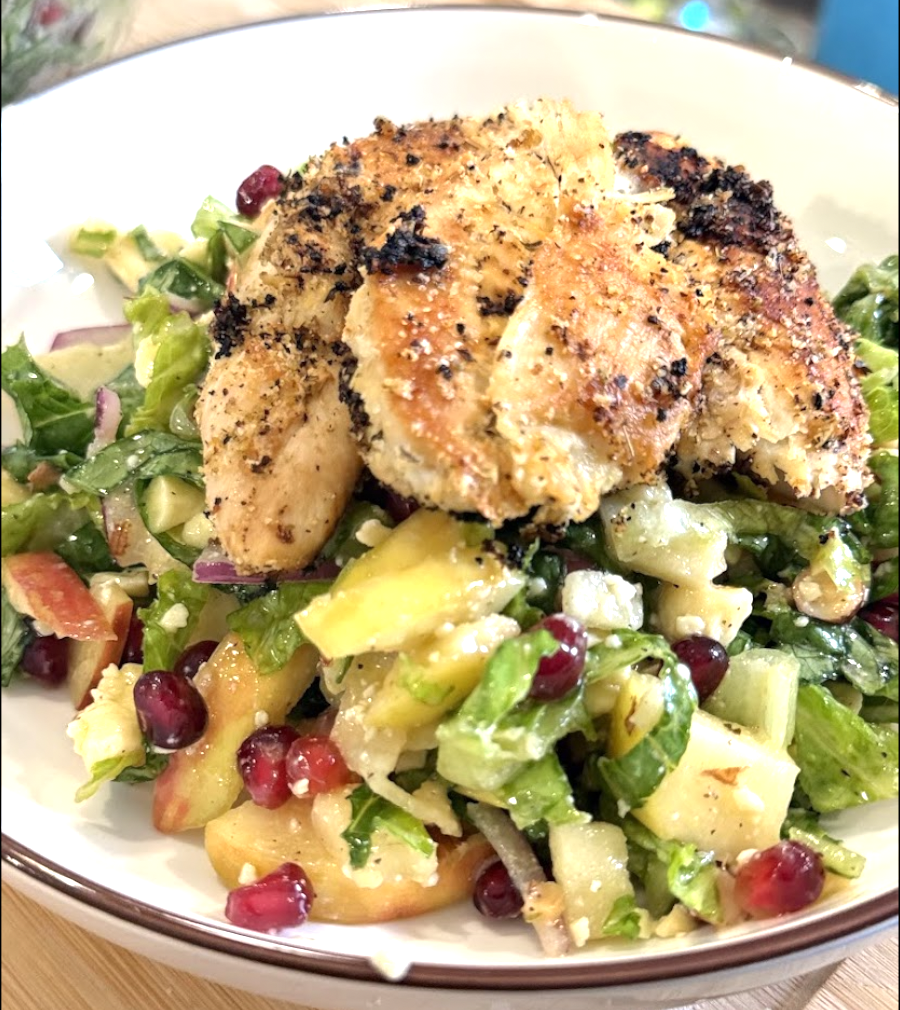
We broke that cycle by building every meal around protein first. Protein stabilizes blood sugar. It keeps you full longer. It stops the spike-and-crash pattern that was running our afternoons.
The most energetic people we met on our travels weren’t following meal plans or counting macros. They were eating whole food, close to the source, prepared simply. Protein, vegetables, healthy fats, fermented foods. No ingredient lists they couldn’t pronounce.
Every time we’d come back to the States, the contrast was immediate. Processed food, hidden sugars, bread with 15 ingredients. And the energy crash came right back with it.
The fix isn’t complicated. Protein-centered meals. Whole food carbs instead of processed ones. Enough healthy, whole fats to keep your hormones and brain functioning. Water before you’re thirsty and not with your food.
The Hidden Drains (Stress and Sleep)
You can’t out-eat chronic stress. You can’t out-exercise it. And you definitely can’t out-caffeinate it.
Cortisol is designed to help you respond to short-term threats. When it stays elevated for months, it burns through your energy reserves, disrupts your sleep, drives inflammation, and makes every other healthy habit less effective.
Most people don’t think of stress as an energy issue but, it’s the biggest one.
You don’t need an hour of meditation to address it. In our experience, what helps the most is an honest assessment. What in your life is generating unnecessary cortisol? What can be removed, reduced, or restructured? Small, consistent changes to your stress load compound the same way small changes to your nutrition do.
And sleep. You cannot supplement or exercise your way out of consistently poor sleep. Sleep is when your body repairs tissue, regulates hormones, and restores the energy you burned through during the day. Shortchange it, and everything else suffers.
After 50, sleep architecture changes. Deep sleep decreases. You wake more easily. Recovery from bad nights takes longer. That’s not a reason to give up on sleep quality. It’s a reason to take it more seriously than you did 20 years ago.
Stress and sleep feed each other. High cortisol wrecks sleep. Bad sleep raises cortisol. Breaking that cycle is one of the highest-impact things you can do for your energy.
The Simple Six focus points
Everything related to your health and wellness comes down to these. Make them a priority, and you will see the difference.
If Your Digestion and Immunity Are Off
Your gut runs more than you think. Digestion, energy, mood, immunity, and even skin. When it’s off, everything is off. This is the foundation for your entire body.
If You Don’t Know What to Eat Anymore
Protein matters more now than ever before. Processed food hits harder. And most nutrition advice out there isn’t written for someone managing a full life after 50.
If Your Skin Is Changing
Skincare products alone can’t resolve internal issues and might even make them worse. Factors like gut health, nutrition, sleep, and stress all impact your face before any cream has a chance to work.
If You are constantly low energy
When the clock strikes 7, and you’re ready to cancel dinner plans because you’re too tired to go out. It usually traces back to a few fixable things, and fixing them changes everything else, too.
If the Scale Won’t Budge
Midlife weight gain isn’t just about calories. Hormones, sleep, gut health, and stress all play a role. We break down what’s actually happening and what shifts make the biggest difference so you can feel and look your best.
If You’re Waking Up Exhausted
You can’t out-supplement bad sleep. You can’t out-exercise it either. And you certainly can’t keep accepting it. Poor sleep affects weight, mood, metabolism, recovery, and almost every health marker that matters.
Check Your Own Baseline
If you’re not sure what’s actually draining your energy, the Simple Six Self-Check is the fastest way to find out. It takes five minutes, covers all six pillars, and gives you a starting point.


About Shawn and Wendy Robinson
Shawn & I met in 1996, started a family, and have built a beautiful life. We’ve also built multiple startups and a Direct Sales business, and have supported ourselves with multiple streams of location-independent income, training thousands of people globally along the way.
Over the past 20 years, we’ve explored health and wellness through personal experience, experimenting with various diets, raising kids, managing health scares, food sensitivities, and weight changes, as well as traveling to 39 countries. These journeys showed us how food quality, lifestyle, and culture influence physical and mental aging. We’re practitioners, not gurus. Everything here stems from real-life experiences, personal advocacy, and taking control.
Disclosure: GutBeautyBody content is written from personal experience and research. We are not medical professionals. All factual health claims are sourced from peer-reviewed research and reputable health organizations. Read our full Medical Disclosure here.